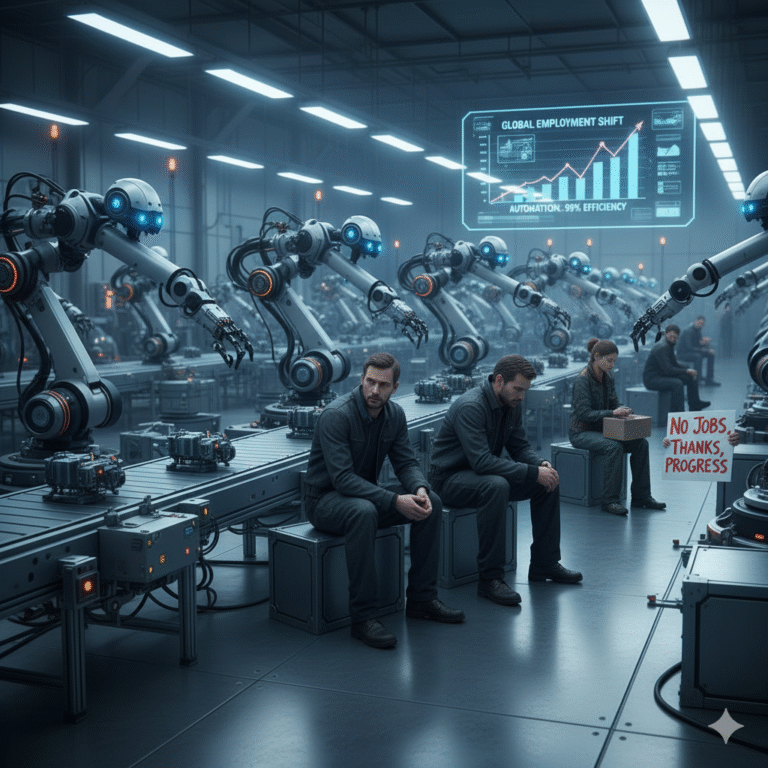
Technology Has Made Students Lazy
 Introduction
Good day, future champions! Looking for a powerful, ready-to-use script for your next debate? You’ve landed in the right place. Today, we’re tackling the very relevant motion: “Technology has made students lazy.”
Let’s be clear. When we say “technology,” we mean the digital tools like smartphones, apps, and the internet that are meant to help us. And “lazy” isn’t just about lying in bed; it’s about a decline in mental effort, a lack of initiative, and a passive approach to learning. The truth is, while technology has its perks, the argument that technology has made students lazy is stronger than ever.
Disclaimer: This article provides persuasive points for one side of an educational debate. It is not meant to dismiss the benefits of technology but to present a strong case for this specific motion.
—
Winning Debate Points on Why Technology Has Made Students Lazy
Here is your script. Deliver these points with confidence and conviction.
### 1. The Death of Deep Thinking and Memory
My first point is the most important one: technology is killing our ability to think deeply. Why struggle to remember a formula or a historical date when Google has it in half a second? Our brains are like muscles. If you don’t exercise them, they get weak. This over-reliance on technology means we aren’t building our memory muscles anymore. We’re just becoming librarians who know how to find a book but have never read one. Think about it. Before a test, what’s the first thing we do? We search for summaries online instead of creating our own. This is a direct path to a decline in our critical thinking skills. It’s a dangerous form of intellectual laziness.
### 2. The Copy-Paste Plagiarism Epidemic
Let’s talk about assignments. Remember when research meant going to the library, reading books, and forming your own ideas? Now, it’s a copy-paste job. A few clicks, and an essay is done. But is it really our work? No. This has created a massive plagiarism problem. Students aren’t learning how to write, argue, or develop their own voice. We’re just becoming very good at clicking ‘copy’ and ‘paste.’ This isn’t efficiency; it’s academic dishonesty fueled by laziness. According to a study highlighted by UNESCO, the ease of digital plagiarism is a growing threat to academic integrity worldwide. We’re not learning; we’re assembling.
### 3. The Curse of Constant Digital Distractions
Imagine this: you sit down to read a textbook. Then your phone buzzes with a notification. A message from a friend. A new video from your favorite creator. Suddenly, an hour has passed, and you’ve only read one page. Sound familiar? This is the reality for most of us. Our focus is shattered. These digital distractions in education are a huge barrier to real, deep work. The constant pull of social media, games, and messaging apps trains our brain to seek quick, easy entertainment instead of the sustained effort needed for studying. The result? We give up on difficult tasks faster. Our attention span is shorter than ever. That’s not just being busy; that’s a lazy mind, unable to concentrate.
### 4. From Active Learners to Passive Scrollers
Learning is supposed to be active. It involves writing, solving problems, and engaging in discussions. But what does a lot of our technology and student laziness look like today? It’s passive scrolling. It’s watching a video explanation instead of working through the math problem ourselves. It’s listening to an audiobook instead of reading and annotating. This shift from active to passive learning makes us mentally lazy. We are just consuming information, not interacting with it. We expect knowledge to be served to us in an entertaining package, without any hard work on our part. True understanding doesn’t work that way.
### 5. The Illusion of “Productivity” and Its Real Cost
“But technology makes us more productive!” I hear you say. Does it, really? We have a dozen apps for organizing our time, but we spend more time setting up the app than actually studying. We use calculators for simple arithmetic, forgetting the basic principles of math. This is the great illusion. This over-reliance on technology for simple tasks is making our own skills rusty. We confuse being “busy” on a device with being genuinely productive. Real productivity is about output—a well-written essay, a solved complex problem, a deeply understood concept. When we rely on tech to do the heavy lifting, our own student productivity and skill set suffer. We’re not productive; we’re just lazy in a more complicated way.
—
Frequently Asked Questions (FAQs)
Q: What’s the strongest point for the opposing side (against the motion)?
The other side will likely argue that technology provides access to vast information and learning tools like educational videos and apps.They’re not wrong. But our counter is simple: access to tools is useless without the mental discipline to use them correctly. When used without discipline, these tools foster the laziness we’ve described.
Q: How should I conclude my speech with these points?
End with power.Summarize your main arguments in one strong sentence. For example: “Mr. Speaker, in summary, the evidence is clear—from the death of deep thought to the plague of plagiarism, technology, when misused, has indeed cultivated a generation of lazier students. The convenience it offers has come at the great cost of our mental diligence. I urge you to uphold the motion. Thank you.”
—
Conclusion / Summary
To wrap it up, the case is clear. Technology has encouraged intellectual laziness through the death of memory and critical thinking, fueled a copy-paste culture, drowned us in digital distractions, promoted passive consumption over active learning, and created a false sense of productivity.
Final Disclaimer: This debate template is created for educational and competitive purposes to help students build argumentation skills. It is acknowledged that technology, when used responsibly, can be a powerful tool for learning, and all perspectives in this debate are valid.
What do you think? Do you have a different take on this topic? Drop your opinions in the comments section below! Also, feel free to share this post with your classmates or those in your debate team