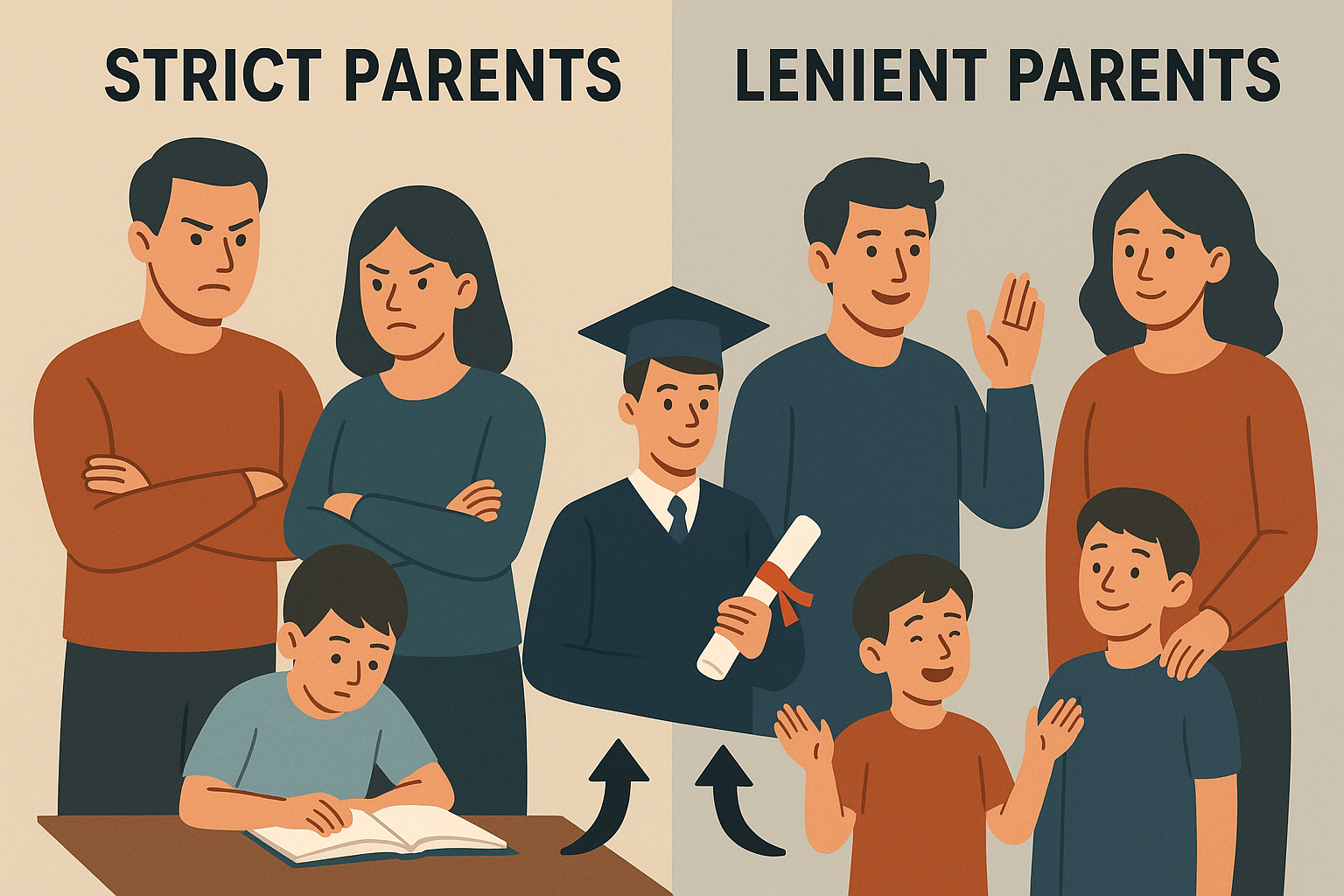
strict parents produce more successful children than lenient parents
 Debate: Strict Parents Produce More Successful Children Than Lenient Parents (7 Winning Points)
Introduction
Good day, future leaders and sharp-minded debaters! Looking for powerful, ready-to-use points for your next debate? You’ve landed in the right place. This template provides a winning script for the motion: “Strict parents produce more successful children than lenient parents.”
Let’s be clear on what we mean. “Strict parents” set clear rules, enforce consistent consequences, and have high expectations. “Successful children” aren’t just about money; they are individuals with strong character, resilience, and the tools to excel in life.
A quick disclaimer: This article is written to provide persuasive points for one side of an educational debate. It is not meant to dismiss the love and care of all parents. The goal is to help you win your argument!
Now, let’s get into the winning points.
Winning Debate Points on Why Strict Parents Produce More Successful Children
Here is your copy-and-paste script, written as if you are delivering it at the podium.
1. The Foundation of Self-Discipline
My first point is about building inner strength. Strict parents don’t just enforce rules; they teach self-discipline. When a child has a curfew, completes homework before play, and does chores regularly, it becomes a habit. These habits build a powerful internal structure.
Think about it. A child who learns to deny immediate gratification for a long-term goal is set for life. This is the same skill needed to save money, study for exams, and build a career. Lenient parenting often gives in to “what feels good now.” But strict parenting builds the self-discipline that turns dreams into reality. It’s that simple.
2. A Safe and Structured Environment
Now, let’s talk about the environment strict parents create. Children thrive on structure. Knowing the rules and the consequences provides a sense of security and order. It removes confusion and anxiety. A home with clear expectations is a safe space for a child’s mind to grow.
Without this structure, life can feel chaotic. A child might stay up too late, skip meals, or spend hours on screens. This isn’t freedom; it’s neglect. The structured environment strict parents provide is the bedrock of stability. This stability allows children to focus their energy on learning and growing, not on navigating daily chaos.
3. Driving Academic Excellence
Here’s a point you can’t ignore: strict parents produce children who excel academically. How? By setting non-negotiable standards for schoolwork. They check homework, limit distracting screen time, and prioritize education above fleeting entertainment.
The result? A child who values learning and develops a strong work ethic. This directly leads to better grades and more opportunities. In fact, a study by the University of Essex found that parents who set high expectations had children who were significantly more likely to attend university. The link is clear. High expectations from parents fuel high achievement in children.
4. Building Resilience for a Tough World
The world is not a lenient place. It’s competitive and often unforgiving. Strict parents prepare children for this reality. When a child faces consequences for breaking a rule, they learn accountability. They learn that actions have results. This builds resilience.
A child who never hears “no” or never faces a consequence will shatter at the first challenge in the real world. But a child raised with firm boundaries learns to cope with disappointment. They learn to problem-solve and persevere. This resilience is a key ingredient for success in any field, from business to personal relationships.
5. Instilling Core Life Skills
Let’s get practical. Strict parents often require children to contribute to the household. Chores like cooking, cleaning, and managing time are not punishments. They are training for adulthood. A young adult who leaves home knowing how to manage a budget, cook a meal, and keep a clean space has a huge advantage.
Lenient parenting often does everything for the child to keep them happy. But this creates helpless adults. The truth is, responsibility taught young turns into capability later in life. These core life skills are what separate independent, successful adults from those who struggle to cope.
6. The Long-Term Advantage
Success is a marathon, not a sprint. The benefits of strict parenting are long-term. The self-discipline, academic foundation, and resilience built in childhood compound over time. A child with these traits becomes a university student who doesn’t skip lectures. They become an employee who meets deadlines. They become a responsible adult who makes wise decisions.
It might seem tough at the moment, but it pays off for a lifetime. The short-term “happiness” of a lenient home often leads to long-term confusion and struggle. Strict parenting is an investment in a child’s future.
7. Clarifying the Difference Between Strict and Harsh
My worthy opponent might argue that strict parenting is harmful. But that confuses “strict” with “harsh” or “abusive.” There is a world of difference. Strict parenting is about guidance and love. It’s about setting boundaries to keep children safe and on the right path. It is not about cruelty.
Authoritative parenting—which is firm but fair—is consistently linked to positive outcomes. The rules are explained, and the love is never in doubt. We are arguing for this firm, guiding hand, not for a tyrannical one. This distinction is crucial to winning this debate.
Frequently Asked Questions (FAQs)
Q: What is the strongest argument for the other side (lenient parents)?
A:The strongest counter-argument is that excessive strictness can stifle a child’s creativity, damage their self-esteem, and harm the parent-child relationship. They might say that children from lenient homes feel more loved and supported emotionally.
Q: How should I conclude this debate speech?
A:End powerfully. Summarize your 2-3 strongest points and finish with a memorable closing line. For example: “Mr. Speaker, for building self-discipline, fostering academic excellence, and preparing children for the real world, the evidence is clear. Strict parenting provides the foundation for a successful life. I rest my case.”
Conclusion / Summary
To recap, we’ve argued that strict parents produce more successful children by instilling self-discipline, creating a structured environment, driving academic excellence, and building crucial resilience and life skills. The long-term benefits are undeniable.
Remember, this is a debate for educational purposes. We respect that every parent loves their child and makes choices they believe are best. This template simply provides arguments to win the specific motion that strict parents produce more successful children than lenient parents.
What do you think? Drop your opinions in the comments section below! Let’s get a discussion going. Also, feel free to share this post with your classmates or those in your debate team!