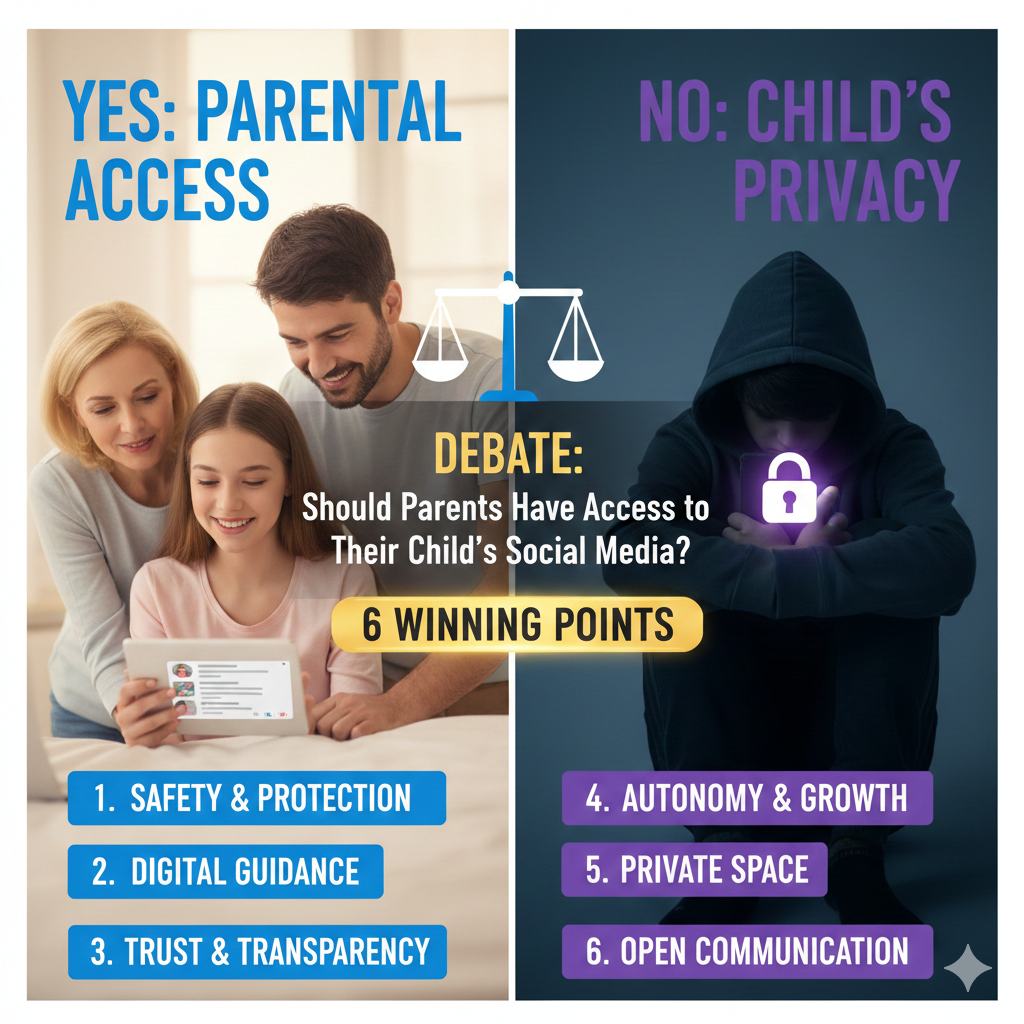
Should Parents Have Access to Their Child’s Social media? (6 Winning Points)
 Debate: Should Parents Have Access to Their Child’s Social Media? (6 Winning Points)
Introduction
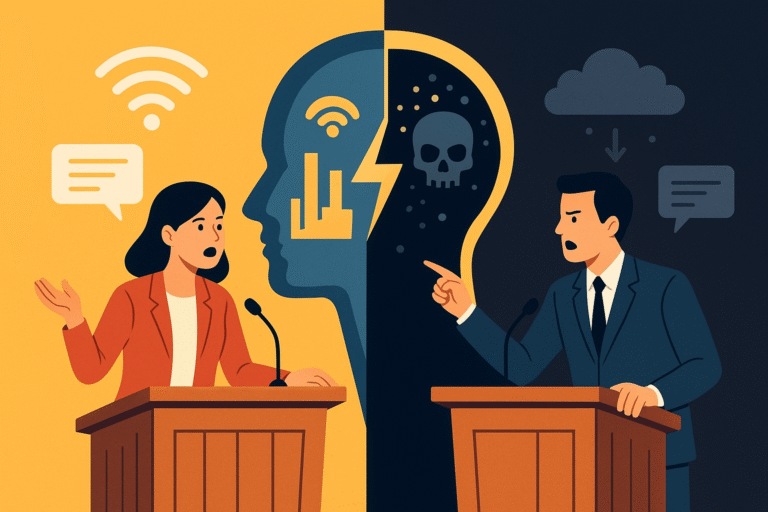
Good day, future champions! Looking for powerful points to win your debate? You’ve landed in the right place. This template provides a complete script for supporting the motion that parents should have access to their child’s social media.
Let’s be clear. Social media isn’t just a game. It’s a real world with real risks and real people. When we talk about parental access to social media, we’re not talking about spying. We’re talking about guidance. It’s about keeping kids safe in a complex digital landscape.
A Quick Disclaimer: This article provides points for one side of an educational debate. It’s meant to build your argumentative skills and is not intended to dismiss the valid concerns about privacy. Both perspectives in this discussion are important.
—
Winning Debate Points on Why Parents Should Have Access
Here is your ready-to-use script. Deliver these points with confidence and conviction.
1. My first point is online safety and protection from predators.
The internet can be a dangerous place. Strangers with bad intentions often target young people online. Think about it. A predator can easily pretend to be a teenager. They can gather information from public profiles and use it to build trust.
As a young person, I might not always spot these red flags. But my parents have more life experience. Their oversight acts as a crucial safety net. It’s not about mistrust. It’s a simple fact of online safety for children. Having my parents as a backstop is a basic precaution, much like wearing a seatbelt.
2. My second point tackles the urgent issue of cyberbullying.
Cyberbullying is a silent epidemic. It doesn’t happen on the playground where teachers can see it. It happens in comments, DMs, and group chats. The pain is real and can have devastating consequences. Now, if I’m being bullied, I might be too ashamed or scared to speak up.
But if my parent has access, they might notice the warning signs. They can see the nasty messages and help me deal with them. This aspect of parental monitoring is not control; it’s support. It ensures I don’t have to face my bullies alone.
3. Let’s talk about guiding us towards responsible social media use.
Social media is a powerful tool. Used well, it can help us learn and connect. Used poorly, it can waste time and spread negativity. The truth is, we are still learning how to navigate it. What should I post? What should I avoid? How much time is too much?
This is where digital parenting comes in. When my parent can see my activity, it opens the door for conversations. They can say, “I saw that post, what was your intention?” or “Be careful with that comment, it could be misunderstood.” This is real-time coaching for responsible social media use. It helps me build a positive digital footprint for my future.
4. My next point is about preventing exposure to harmful content.
The internet is full of unfiltered content. With one wrong click, I can stumble upon hate speech, graphic violence, or inappropriate adult content. Algorithms can sometimes push this content into my feed without me looking for it. This exposure can be confusing and damaging.
Parents are the best filters. Their access allows them to understand what I’m seeing online. They can then help me process it or use tools to block it altogether. This proactive approach to internet safety protects my mental well-being during my formative years. It’s a shield, not a shackle.
5. This one is crucial: it builds open communication and trust.
Some call it snooping. I call it an open-door policy. When the rule of access is clear from the start, it’s not a secret. It becomes a normal part of our family’s approach to technology. This transparency actually builds stronger trust.
How? It forces us to talk. If my parent questions a post, we discuss it. This leads to deeper conversations about peer pressure, self-image, and online ethics. This practice of parental guidance turns a potential battleground into common ground. It brings us closer, not drives us apart.
6. Finally, we must acknowledge the very real consequences of a bad digital footprint.
What I do online today can follow me forever. College admissions officers and future employers check social media profiles. A silly post made today could cost me a scholarship or a job tomorrow. Do I always think that far ahead? Honestly, no.
My parents do. They are thinking about my future when I’m only thinking about the moment. Their oversight helps me avoid permanent mistakes. They are the guardians of my future, both online and off. In a world where teen social media use can have lifelong impacts, their access is a necessary safeguard.
—
Frequently Asked Questions (FAQs)
Q: What is the strongest argument for the other side (against parental access)?
The strongest counter-argument is the child’s right to privacy and the need to develop independence.They might argue that constant monitoring shows a lack of trust and can prevent teens from learning to make their own responsible choices.
Q: How should I deliver this speech for maximum impact?
Speak clearly and with passion.Make eye contact with your audience and judges. Use hand gestures to emphasize your main points. Practice so you know the material well enough to sound natural, not like you’re just reading.
—
Conclusion / Summary
In summary, my arguments are clear. Parental access to social media is a modern necessity for online safety, combating cyberbullying, and providing essential guidance. It is a form of protection, not persecution, rooted in love and a commitment to a child’s well-being and future.
A Final Disclaimer: This debate template is created for educational purposes to help students prepare for competitions. It is vital to respect all perspectives in this important conversation about child privacy online and social media risks.
What do you think? Do you agree with these points? Drop your opinions in the comments section below! Also, feel free to share this post with your classmates or debate team members. Let’s get you that trophy