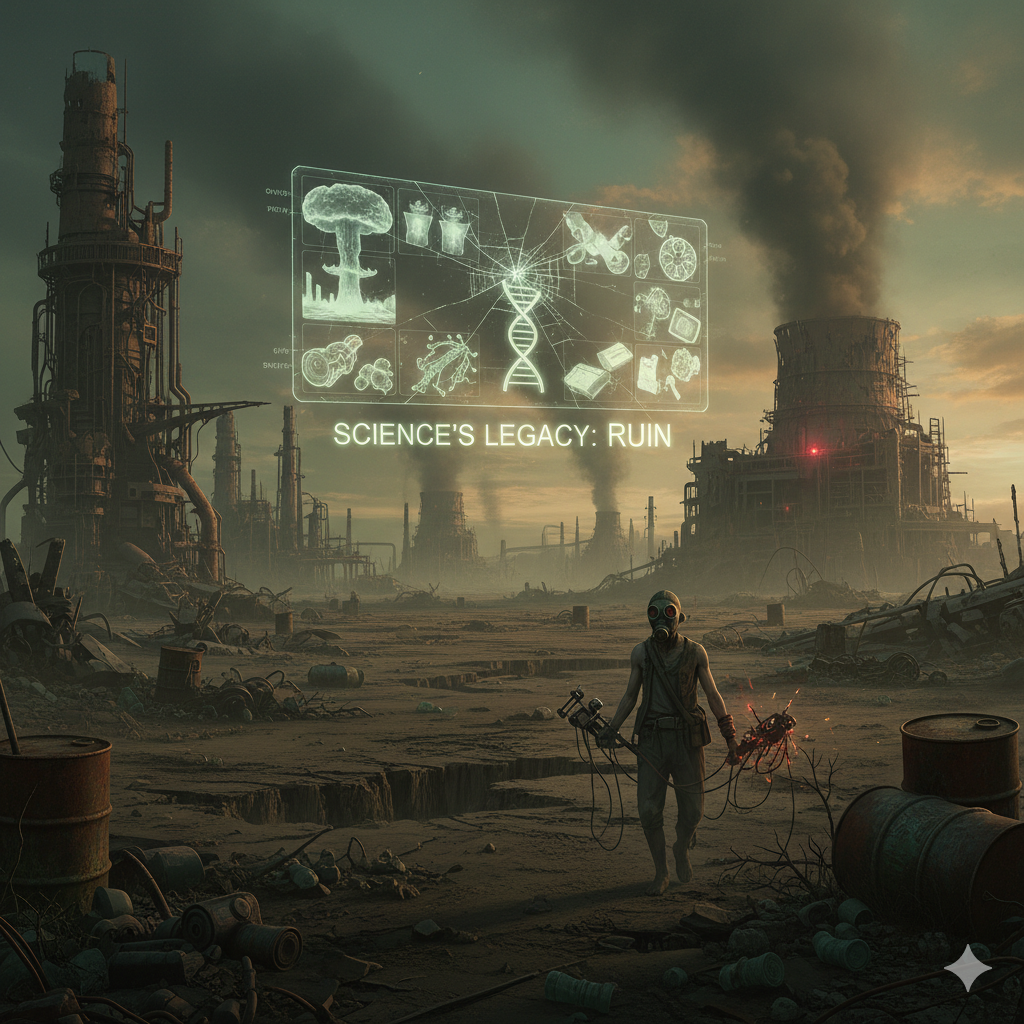
Science has done more harm than good
 Good day, students! Looking for powerful points for your next debate? You’ve landed in the right place. This template provides a strong script for anyone supporting the motion that “Science has done more harm than good.”
Let’s be clear about what we’re discussing. When we talk about “science” in this context, we mean the application of scientific knowledge through technology and industry. This is not about the pure quest for knowledge, but about how that knowledge has been used.
A quick but important disclaimer: This article provides arguments for one side of an educational debate. It is not meant to dismiss the incredible work of scientists or the genuine benefits science has brought. Our goal is to build strong, persuasive arguments for a competitive setting.
Winning Debate Points on Why Science Has Done More Harm Than Good
Here are your winning points, written ready for you to deliver. Speak them with confidence and conviction.
1. My first point is the environmental destruction fueled by scientific progress
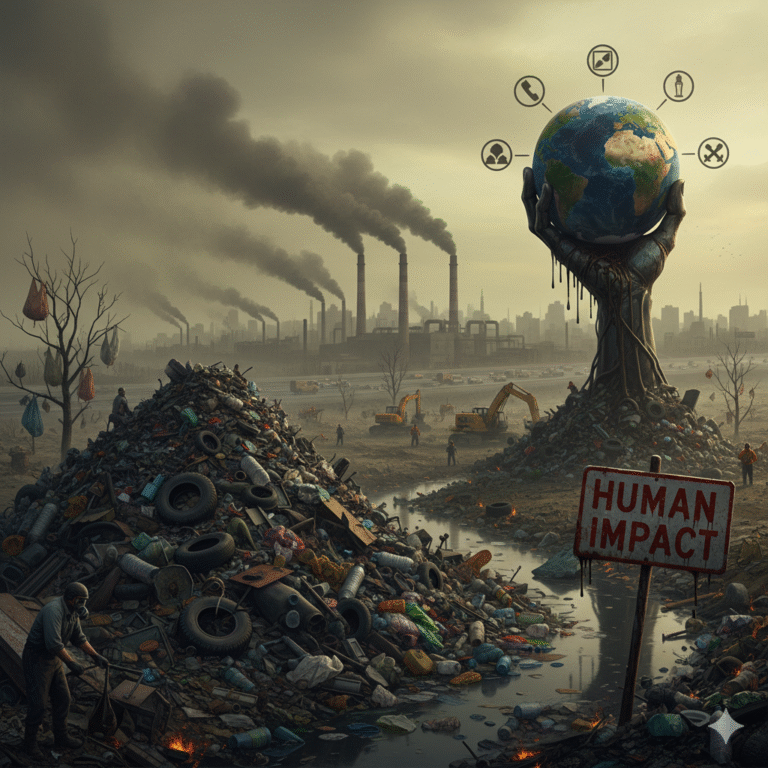
Look at the world around us. Our air is thick with pollution, and our forests are vanishing. Who is to blame? The industrial machines, the chemical plants, the endless pursuit of growth—all products of scientific advancement.
The evidence is undeniable. Science has done more harm than good to our planet. We’re now in a decade of unprecedented heat, with greenhouse gas concentrations at an all-time high . This isn’t just about a warmer day; it’s about catastrophic wildfires, locust swarms decimating crops, and entire ecosystems collapsing . Every hour, we lose forests the size of 300 football fields . This is the direct cost of industrial agriculture and resource extraction. Science gave us the power to dominate nature, and in doing so, it gave us the tools to destroy it.
2. My second point is the creation of weapons of mass annihilation.
Think about this for a moment. One of the first major achievements of modern nuclear science was the atomic bomb. We took a profound understanding of physics and turned it into a weapon that can wipe out cities in an instant.
The saddest part? This isn’t a relic of the past. Nations still spend billions on scientific research for newer, deadlier weapons . This is a terrifying truth. The same intellectual energy that could be curing diseases is often funneled into perfecting the art of war. The power science has unlocked is immense, but without parallel wisdom, it has become a looming threat over all of humanity. Our progress in physics and chemistry is measured in megatons, and that is a horrifying legacy.
3. My third point addresses the ethical nightmares of human experimentation.
Science, when left unchecked by a strong moral compass, has repeatedly trampled on human rights. History is stained with examples of research that treated people as mere objects.
Consider the Tuskegee syphilis study, where vulnerable men were denied treatment so scientists could observe the disease’s progression . Or the Nazi experiments, which were acts of torture disguised as research . Even today, we grapple with questions about gene editing in human embryos, a practice many leading scientists call unethical . The drive to know, to experiment, has too often overridden the basic duty to respect human dignity. This isn’t just bad apples; it’s a fundamental flaw in how scientific ambition can sometimes operate.
4. My fourth point is the crisis of trust caused by poor scientific practices.
Can we always trust what we read in a scientific paper? The unfortunate answer is no. We are now facing what some call a “scientific crisis of epic proportions” .
Why? Because honest yet unacceptable research practices are widespread. This includes things like “p-hacking”—manipulating data until it shows a desired result—or only publishing positive findings while hiding negative ones . This means the very foundation of knowledge we rely on can be shaky. When science allows hype and the pressure to publish to override truth, it harms everyone. It leads to wasted resources, ineffective medicines, and a public that loses faith in the very institution that is supposed to guide us. When we can’t trust science, we are all at risk.
5. My fifth point is the plague of plastic and pollution.
Walk down any street, look at any beach. What do you see? Plastic bottles, wrappers, and bags. This is the gift of a scientific “miracle” material that now chokes our planet.
Let’s talk numbers. By 2015, the world was producing 419 million tons of plastic per year . A staggering 91% of all plastic ever made has never been recycled . It sits in our landfills, it floats in our oceans, and it takes 400 years to decompose. Science created this indestructible material, but failed to create a responsible plan for its lifecycle. Now, millions of tons of plastic enter our oceans every year, harming wildlife and entering our own food chain . We are literally eating and drinking the consequences of this irresponsible innovation.
6. And my final point is that science moves faster than our wisdom.
The famous author Isaac Asimov once said that the saddest aspect of life is that “science gathers knowledge faster than society gathers wisdom” . This is the heart of our problem.
We are like children who have been given a powerful tool without being taught how to use it safely. We have the knowledge to edit genes, but not the wisdom to decide if we should. We can build social media algorithms that connect the world, but we don’t have the wisdom to prevent them from spreading misinformation and causing mental health crises. Science gives us the “can,” but it doesn’t give us the “should.” This dangerous imbalance is why the harms—from climate change to weapons to pollution—are now outpacing the benefits. The tool is not to blame, but the hand that wields it is. And right now, that hand is causing more harm than good.
Frequently Asked Questions (FAQs)
What is the strongest argument for the other side?
The opposition will likely focus on medical advances like vaccines and antibiotics, which have saved millions of lives. Your counter is to acknowledge this but then pivot to the bigger picture. Argue that these life-saving benefits are now being overshadowed by existential threats like climate change and weapons of mass destruction that endanger everyone on the planet.
How should I conclude this debate speech?
End with a powerful summary. You could say: “Mr. Speaker, Judges, and my fellow debaters, we have shown you the clear and present dangers. From an environment in crisis to weapons of mass terror and a breakdown in ethical research, the evidence is overwhelming. While science promised a brighter future, it has delivered a more dangerous and polluted one. The harm is not accidental; it is a direct consequence of unguided scientific ambition. For these reasons, we urge you to stand with us and affirm that science has done more harm than good. Thank you.”
Conclusion / Summary
To recap, our key arguments are science’s role in environmental destruction, weapon creation, unethical human experiments, a growing trust crisis, the pollution plague, and the critical gap between knowledge and wisdom.
Disclaimer Reminder: This debate template is created for educational and competitive purposes to help students build argumentative skills. It is not a denial of the valuable contributions of science and scientists to our world.
What do you think? Do you have another winning point for this motion? Drop your opinions in the comments section below! Also, feel free to share this post with your coursemates or those in your debate team