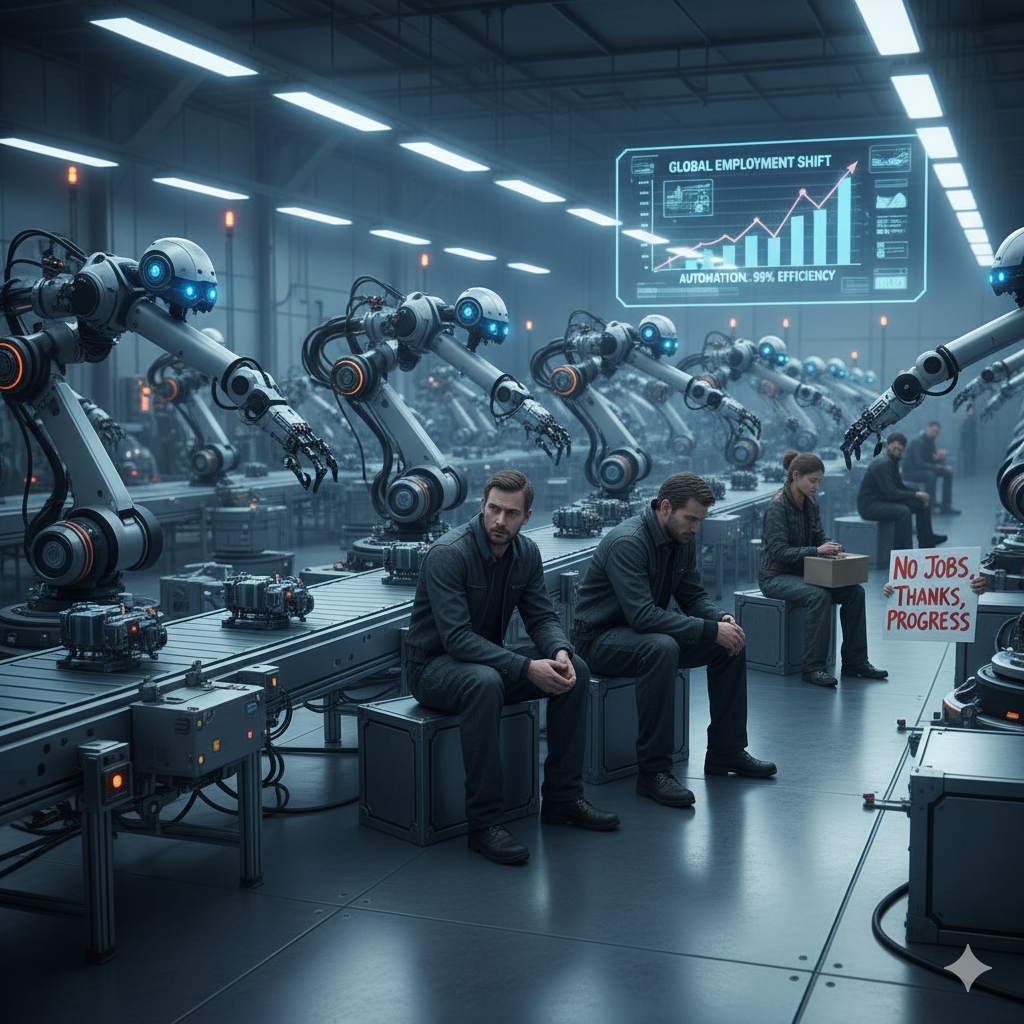
Robots will replace human workers in the future
 Good day, future debaters! Ready to win your next competition? You’ve found the perfect script. This template gives you powerful arguments for supporting the motion that “Robots will replace human workers in the future.”
Let’s be clear about what we’re discussing. When we talk about “robots,” we mean artificial intelligence systems, automation technology, and smart machines that can perform tasks humans currently do. “Replace” doesn’t mean overnight—it means gradually taking over most workforce functions.
Important educational disclaimer: This template presents one side of a debate for academic purposes. It’s not meant to fear-monger or dismiss the value of human workers. Debate is about building strong arguments, and that’s exactly what we’re doing here.
Winning Debate Points on Why Robots Will Replace Human Workers in the Future
Here’s your ready-to-deliver script. Speak these points with confidence and make them your own.
1. My first point is pure efficiency and cost-effectiveness.
Let’s be real—businesses want to save money. Robots don’t need salaries, lunch breaks, or sleep. They work 24/7 without complaining. Once a company buys the hardware, the cost is basically fixed.
Think about it. A manufacturing robot might cost $100,000 upfront. But it works three shifts, never takes sick days, and doesn’t demand healthcare benefits. Over two years, it’s cheaper than paying three human workers. The math is undeniable. This economic pressure alone will drive the replacement. Companies that don’t automate will get priced out by competitors who do. It’s survival of the fittest in business, and robots are becoming the fittest.
2. My second point is the incredible speed of technological advancement.
Remember when smartphones seemed like science fiction? Now we can’t live without them. AI and robotics are advancing even faster. What seems advanced today will be primitive in five years.
The truth is, we’re reaching tipping points. Machine learning algorithms improve themselves. Each generation of robots gets smarter, cheaper, and more capable. They’re moving from simple factory tasks to complex decision-making. We’re not talking about just manual labor anymore. AI can now analyze legal documents, diagnose diseases, and even create art. When technology grows this rapidly, replacement isn’t a question of “if” but “when.” The trajectory is clear and unstoppable.
3. My third point addresses precision and quality control.
Humans get tired. We make mistakes. Our attention wanders. Robots don’t. They perform the same task a million times with identical precision every single time.
Consider manufacturing or surgery. A robot-assisted surgeon can make incisions measured in millimeters—far more precise than the steadiest human hand. In electronics manufacturing, robots place microscopic components with perfect accuracy every time. Why would companies accept human error when perfection is available? As the World Economic Forum notes in their Future of Jobs Report, businesses are rapidly adopting automation precisely for this quality advantage. The evidence is already here.
4. My fourth point is about dangerous and undesirable jobs.
Let’s talk about jobs humans shouldn’t be doing. Mining deep underground. Cleaning up nuclear waste. Working in extreme temperatures. These jobs risk lives every day.
Robots can handle these hazardous environments without fear. They don’t get cancer from chemical exposure. They don’t die in mining accidents. This isn’t just convenient—it’s ethical. Why should humans risk their lives when machines can do it safely? As robotics improve, we’ll see them take over not just dangerous jobs but boring, repetitive ones too. Most people don’t dream of spending their lives on an assembly line or doing data entry. Robot replacement in these areas actually frees humans for more meaningful work.
5. And my final point is the scale of what’s already happening.
This isn’t theoretical anymore. It’s happening right now. Amazon warehouses use over half a million robotic systems. Automotive factories are 90% automated. Fast food chains are testing fully robotic kitchens.
The numbers don’t lie. A University of Oxford study found that 47% of US jobs are at high risk of automation. That was nearly a decade ago—the percentage has only grown. We’re watching the replacement unfold in real-time across retail, manufacturing, transportation, and even white-collar jobs. Self-checkouts replace cashiers. Algorithmic trading replaces stock analysts. Chatbots replace customer service reps. The pattern is clear. Robots will replace human workers in the future because they’re already replacing them today, and that trend is accelerating exponentially.
Frequently Asked Questions (FAQs)
What’s the strongest argument against this motion?
The opposition will likely say “robots will create new jobs” or “humans have adapted to technological changes before.” Your counter is simple: the scale is different this time. Previous revolutions replaced muscles—this one replaces brains. When AI can outperform humans in both physical AND cognitive tasks, what’s left? Also, the speed of change is unprecedented. There won’t be time for mass retraining of billions of workers.
How should I start my speech?
Begin strong: “Mr. Speaker, honorable judges, worthy opponents, and fellow students. I stand before you today to support the motion that robots will replace human workers in the future. This isn’t science fiction—it’s the logical conclusion of trends we’re already witnessing in every sector of our economy.”
Conclusion / Summary
To summarize, we’ve established five undeniable points: the economic efficiency of robots, the rapid pace of technological advancement, their superior precision and quality, their ability to handle dangerous work, and the overwhelming evidence that this replacement is already underway across multiple industries.
Final Disclaimer: Remember, this debate template is for educational purposes to help students develop critical thinking and public speaking skills. The real-world outcome will depend on many factors including policy decisions and ethical frameworks.
What do you think? Do you have another powerful point for this motion? Share your thoughts in the comments below! Don’t forget to share this post with your debate team members and classmates who might find it helpful.