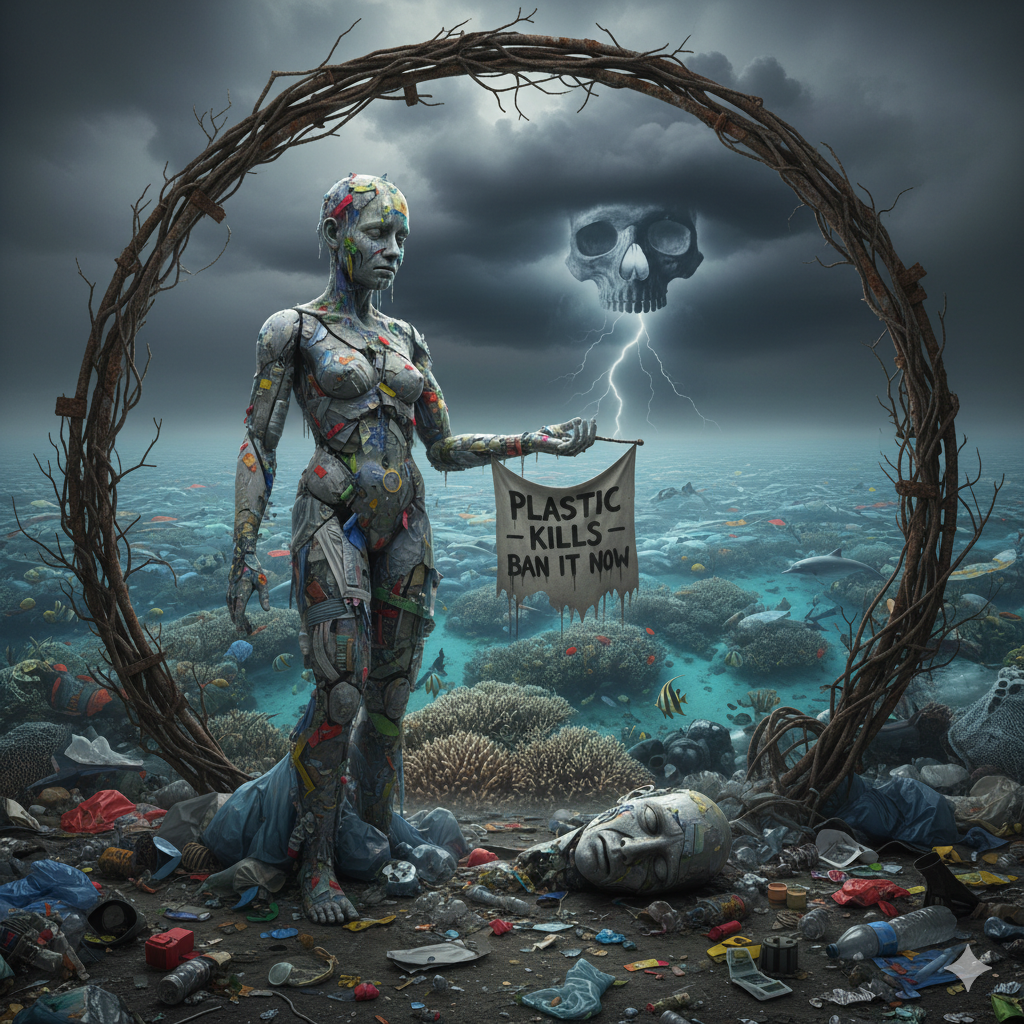
Plastic should be banned.
 introduction
Good day, future leaders and brilliant debaters!
Looking for powerful, ready-to-use points for the motion “Plastic Should Be Banned”? You’ve come to the right place. This template gives you the exact script to argue why banning plastic is a necessary step for our health, our environment, and our future.
Let’s be clear on the terms. When we talk about “plastic,” we are focusing on single-use plastics—items like water sachets, straws, and styrofoam plates used just once and thrown away. To “ban” means the government should prohibit the production, sale, and use of these items.
A quick but important note: This article provides arguments for one side of an educational debate. It is not meant to completely dismiss the challenges of a plastic ban but to help you present a compelling case. Let’s get you ready to win!
Winning Debate Points on Why Plastic Should Be Banned
### 1. Plastic Pollution is Choking Our Cities and Environment
My first point is the most obvious one. Look around you. Plastic pollution is everywhere—in our drains, on our streets, and in our beautiful natural landscapes. The evidence is right before our eyes.
Lagos State alone generates over 13,000 tonnes of waste daily, a significant part of which is single-use plastic . Think about that number. This isn’t just an eyesore; it’s a full-blown environmental crisis. These plastics clog our waterways, which leads to terrible flooding during the rainy season. When our drains are blocked, the water has nowhere to go. It floods our homes, our markets, and our roads. Banning these plastics is the first and most direct step to reclaim our clean and flood-free cities .
### 2. The Grave Health Risks of Plastics to Humans
Now, let’s talk about something even more personal: your health. This isn’t just about a dirty environment; it’s about what’s entering our bodies.
Scientific research has found microplastics—these tiny, invisible pieces of plastic—in our rivers and, alarmingly, in the fish we eat . Even more frightening? Studies show these microplastics have been found in the human bloodstream . Let that sink in. The plastic we throw away is coming back to us, inside us. We are literally eating and drinking the plastic waste we create. The potential long-term health risks from this are still being uncovered, but can they be good? Of course not. A ban is the only way to stop this cycle and protect the health of every Nigerian .
### 3. Nigeria is Already Taking Action Against Plastic
Some might say a ban is too extreme. But here is the truth: Nigeria is already moving in this direction because the problem is so urgent. This isn’t just a theory; it’s already becoming our national policy.
The Federal Ministry of Environment has already started leading by example, banning single-use plastics in its own offices . Furthermore, the government has confirmed a full national ban on single-use plastics is coming in 2025, targeting straws, cutlery, and those small water sachets . Lagos and Abia states have also taken the lead with their own bans . So, when you argue for the ban, you are not arguing for something new. You are arguing in support of a decision that is already being made to save our nation. You are on the right side of history and policy.
### 4. A Ban Spurs Innovation and a Circular Economy
“But what about jobs?” people ask. This is a fair question. But a ban doesn’t mean the end of opportunity; it means the beginning of a new one. It pushes us toward a circular economy, where we eliminate waste and continually use resources .
Instead of a “take-make-dispose” system, a ban encourages innovation. It creates a market for sustainable alternatives like reusable bags, bamboo straws, and biodegradable containers . It supports small-scale enterprises that turn waste into wealth . Companies can be supported to adopt Extended Producer Responsibility (EPR), where they take care of their products throughout their life cycle . This is how we build a greener economy. A ban isn’t an end; it’s a bold new beginning for sustainable jobs and smarter industries.
### 5. The Global Community is Succeeding with Plastic Bans
Finally, let’s look beyond our borders. Nigeria is not alone in this fight. Arguing for a ban aligns us with successful global efforts.
Look at Rwanda. It is often cited as one of the cleanest nations in Africa because of its strict enforcement of a plastic bag ban . Their top-down approach with stringent penalties, combined with grassroots advocacy, has made the ban work. Other countries like Kenya and Uganda have also implemented their own bans . By joining these nations, Nigeria is not being a follower; we are being a responsible global citizen. We are learning from their successes and showing the world that we, too, are committed to a healthier planet.
Frequently Asked Questions (FAQs)
What is the strongest argument for the other side?
The strongest point against the ban is usually about cost and convenience. Opponents argue that alternatives to cheap plastic items like water sachets are more expensive and could burden poor families. They also say a sudden ban could cost jobs in the plastic manufacturing industry.
How should I conclude my debate speech?
End with power. Summarize your key points briefly, then finish with a strong, memorable statement. For example: “For the health of our people, the cleanliness of our cities, and the promise of a sustainable future, we must have the courage to say ‘no’ to plastic. I urge you all to support the motion that plastic should be banned.”
What if the opposition says a tax is better than a ban?
You can counter this by saying that a tax still allows plastic pollution to continue, harming the poor who cannot afford the tax. A ban, on the other hand, is a clear and decisive action that stops the problem at its source. While a tax might reduce use, a ban eliminates it, which is the ultimate goal for our environment .
Conclusion / Summary
To sum up, we have seen that a ban on plastic is crucial to stop environmental degradation, protect ourselves from health risks, align with national policy, create new economic opportunities, and join a global movement for change.
Disclaimer: This debate template is created for educational and competitive debate purposes. It presents one side of an argument to help students develop their public speaking and critical thinking skills. All perspectives in a debate have their own merits.
What do you think? Do you have another winning point for this motion? Drop your opinions in the comments section below! Also, feel free to share this post with your coursemates or those in your debate team