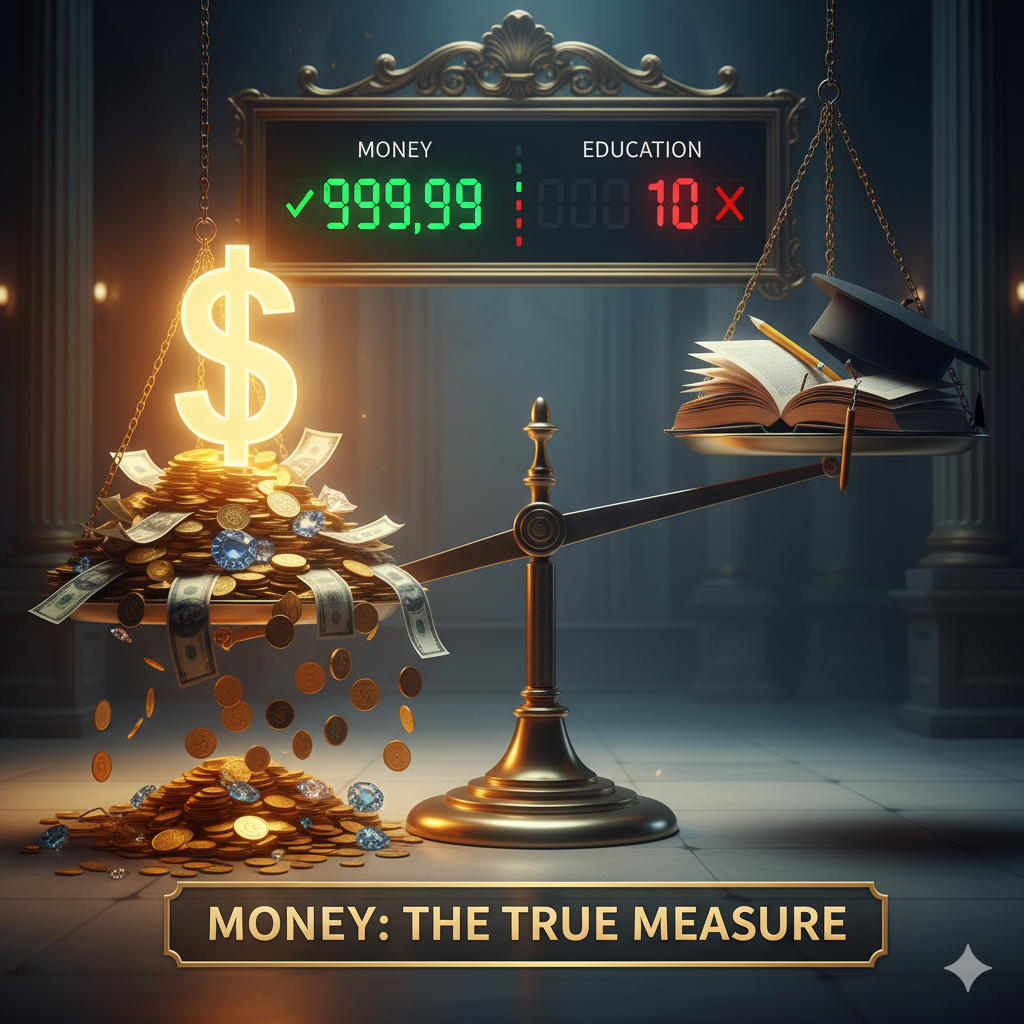
Money is more important than education
 Debate: Money is More Important Than Education (6 Winning Points)
Good day, brilliant debaters! Looking for powerful, ready-to-use points for your next competition? You’ve hit the jackpot. This template provides a complete script supporting the motion that “Money is more important than education.”
Let’s be clear from the start. “Education” means the formal learning we get in schools. “Money” represents the financial resources we need for everything in life. This debate is about which one has a more immediate and powerful impact on our survival and success.
A quick but important note: This article provides arguments for one side of an educational debate. It is not meant to devalue the incredible importance of education, but to help you build a strong, persuasive case for the other side. Use this as your foundation and add your own brilliance!
Now, let’s get into the winning points.
Winning Debate Points on Why Money is More Important Than Education
1. You Can’t Learn on an Empty Stomach
My first point is simple. Have you ever tried to read a textbook when you’re hungry? It’s impossible. Your stomach grumbles, your head hurts, and you can’t concentrate.
This isn’t just a feeling—it’s a fact. A report from the World Food Programme confirms that proper nutrition is fundamental for a child’s cognitive development. Money puts food on the table. Money pays for the light that allows you to read at night. Money buys the textbooks and the school uniform.
Think about it. What good is the knowledge in a book if you’re too hungry to absorb it? Education becomes a luxury when your basic survival is at stake. Money provides the foundation that makes learning even possible.
2. Education Doesn’t Always Pay the Bills
Now, let’s talk about a harsh reality. We all know graduates who are unemployed. They have degrees, diplomas, and certificates, but they can’t find a job. Their education is complete, but their pockets are empty.
In Nigeria, we’ve seen countless university graduates roaming the streets looking for work. Meanwhile, a young person with a small startup capital can begin a business and start earning immediately. That capital comes from money, not a diploma.
Your school certificate can hang on the wall. But can it buy you a plate of food? Can it pay your rent? The truth is, a degree without the financial means to leverage it is often just a piece of paper. Money is the engine that turns knowledge into profit.
3. Money Solves Immediate Crises, Education Does Not
Imagine this: a family member is rushed to the hospital. The doctors won’t attend to them until an admission deposit is paid. In that critical moment, what will save your loved one’s life?
Will you run to the library? Will you present your school report card? Of course not! You need money. Cash. Immediate payment.
This scenario plays out every single day. Money acts as a shield against life’s unexpected emergencies—medical bills, sudden job loss, or urgent repairs. Education is a long-term investment. But money is the lifesaver you need right now, today. When crisis hits, money is the first and only solution.
4. Financial Literacy is a Life Skill You Need Now
Let me ask you a question. Do you know how to manage a budget? Or how interest on a loan works? These are things you need to survive as an adult, yet we don’t learn them in most school classrooms.
A shocking 87% of American adults said high school did not leave them “fully prepared” for handling money in the real world . This is a global problem! Being “educated” doesn’t automatically mean you are financially smart.
Money management is one of the most critical skills for a successful life. Knowing how to save, invest, and avoid debt is what keeps you out of poverty. You can have a PhD and still be bankrupt if you don’t know how to manage your money. Financial literacy—how to handle money—is the ultimate practical education.
5. Money Provides Access and Opportunities
Here’s the thing: education might give you the idea, but money gives you the platform. Think of a brilliant student from a poor village. They might have the intelligence to become a world-class engineer.
But without money, can they pay for JAMB forms? Can they afford the tuition of a good university? Can they buy a computer or access the internet for research? The answer is often no.
Money removes these barriers. It buys the tools, pays the fees, and opens the doors that education alone cannot. It provides the access. In today’s world, opportunity isn’t always free. Very often, it has a price tag.
6. In Our Economy, Money is the Real Security
Let’s be honest about the situation in our country. With rising costs and economic uncertainty, what provides real security for a family?
Is it the father’s university certificate from 20 years ago? Or is it his monthly salary and savings? When prices of food and fuel go up, it’s the family with financial savings that survives comfortably, not necessarily the family with the most degrees.
Financial security means peace of mind. It means being able to plan for the future without constant fear. Education is an asset, but in our daily lives, money is the ultimate safety net. It is the buffer that protects you from the shocks of a struggling economy.
Frequently Asked Questions (FAQs)
What is the strongest argument for the other side?
The opposition will likely argue that education is what creates sustainable wealth and drives long-term societal progress.They might say that education leads to innovation and creates the minds that generate money in the first place. Your counter is to focus on the immediacy of money’s power and the reality that without initial capital, it’s incredibly difficult to apply your education.
How should I conclude this debate speech?
A strong conclusion should powerfully restate your main idea.You could say: “Honorable judges, opposing team, and fellow students, I have shown you that while education is a valuable tool, money is the essential fuel. It feeds the hungry student, pays the critical hospital bill, and provides the security every family needs. Therefore, I firmly rest my case that money is, without a doubt, more important than education.”
Isn’t it shallow to value money over knowledge?
This isn’t about being shallow.It’s about being practical and realistic. We are talking about survival and the ability to act in a crisis. Valuing money in this context means valuing the ability to save a life, feed a family, and seize an opportunity. That’s not shallow—that’s responsible.
Conclusion / Summary
To wrap up, we’ve seen that money is fundamental for basic survival, it solves immediate crises that education can’t, and it provides the access and security needed to thrive in a challenging economy.
Remember everyone, this script is designed for educational debate to help you develop critical thinking and public speaking skills. Education remains a profoundly powerful force for personal and national development. This is about exploring one perspective for academic purposes.
What do you think? Drop your opinions in the comments section below… Also, feel free to share this post with your classmates or those in your debate team!
I hope this template gives you the confidence to win your next competition. Go and make your case!
![How to Remember What You Read Without Taking Notes: 5 Shocking Methods [Stop Failing Now]](https://schoolsguide.name.ng/wp-content/uploads/2025/12/1766661763983-768x768.png)