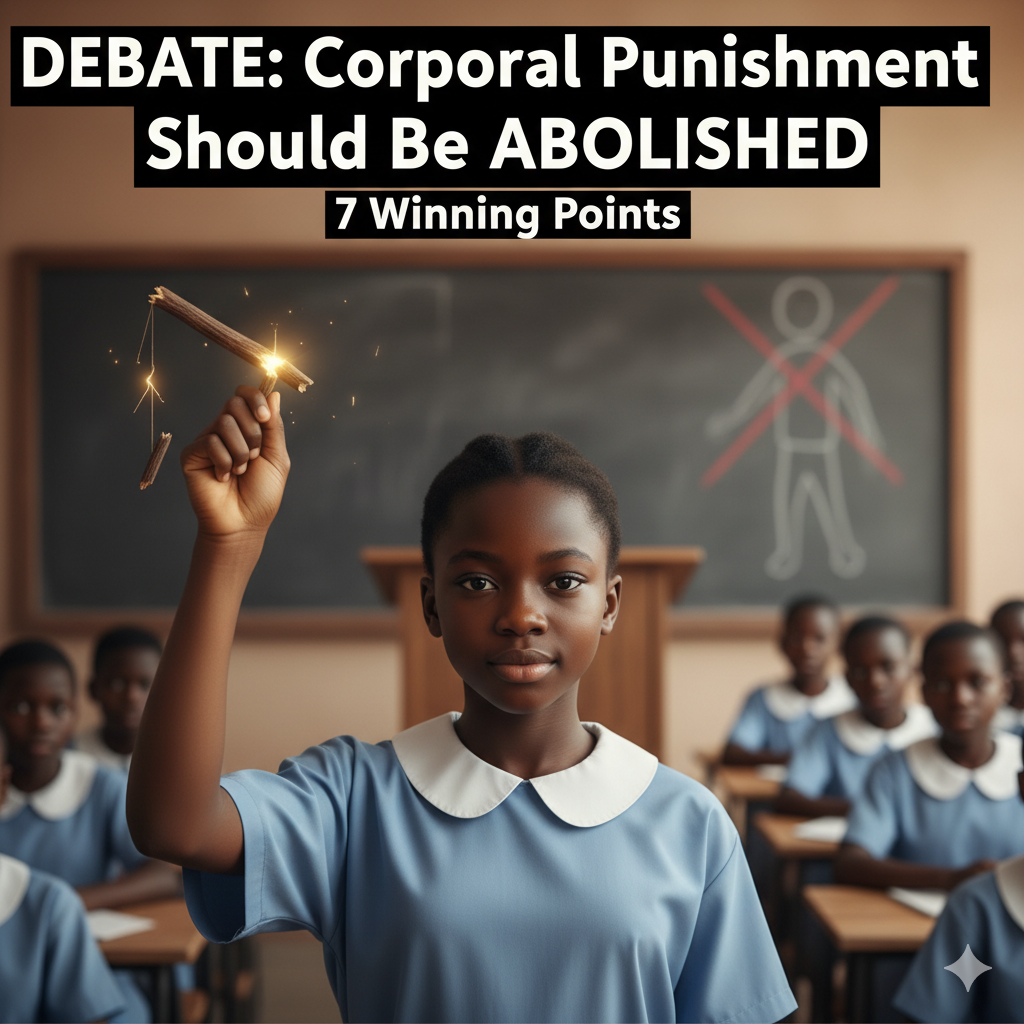
corporal punishment should be abolished debate points
Good day, students!
Are you preparing for a debate on abolishing corporal punishment and need the script that will win it for your team? You are in the right place.
We are here to support the motion that “corporal punishment must be abolished in all schools.” This post gives you the complete corporal punishment should be abolished debate points that you can copy, adapt, and use to convince the judges.
What is corporal punishment? Simply put, it’s any punishment that uses physical force. This includes flogging, caning, slapping, or forcing students to kneel for long periods, all in the name of “discipline.”
A Quick Note: This article is designed to help you argue for this motion in an educational debate. We are not dismissing the need for proper discipline, but exploring why this specific method is outdated, harmful, and needs to stop.
🎤 Winning Debate Points on Why Corporal Punishment Should Be Abolished
Here is the script you can adapt for your speech.
1. It Causes Long-Term Psychological Harm
Good day, panel of judges, co-debaters, and all protocols observed. My first point is simple: flogging and slapping our students does not build them; it breaks them.
We are not just talking about the physical pain of the cane, which heals. We are talking about the long-term psychological harm that lasts a lifetime. This practice teaches children fear, not respect. It leads directly to low self-esteem, serious anxiety, and even depression.
A child who is always afraid of being beaten in class cannot be a confident learner. They become quiet, withdrawn, and unable to ask questions. Is that the kind of future leader we want to build?
2. It Teaches That Violence is the Answer
Now, let’s talk about the message we are sending.
When a teacher, an adult in authority, uses violence to solve a problem (like a student’s misbehaviour), what are they teaching that child? They are teaching that violence is an acceptable, and even normal, way to solve conflicts.
This creates a dangerous cycle of violence. That same student will go to the playground and bully a junior student to get what they want. They will grow up and believe that hitting is the only way to show authority or settle a disagreement. We are basically creating a more violent school environment and a more violent society, all in the name of ‘discipline’.
3. It is an Ineffective Way to Discipline
My opponents will likely talk about ‘sparing the rod and spoiling the child.’ But the truth is, caning is an ineffective discipline tool. It’s lazy.
It stops the bad behaviour for a few minutes, but only out of fear. It does not teach the child why their action was wrong. The child just learns how to not get caught next time. They don’t learn self-control, responsibility, or respect. They just learn to fear the cane.
This is not real discipline. Real discipline is about correction and teaching, not just pain.
4. It Is a Violation of a Child’s Human Rights
Let’s be very clear. Hitting a child is a violation of children’s rights.
If you slap an adult in the market, it is called ‘assault,’ and you can be arrested. Why is it suddenly called ‘discipline’ when the victim is a child? Children have a right to human dignity and physical integrity.
Many international bodies, including the World Health Organization (WHO), state clearly that corporal punishment harms children’s health and has no positive outcomes. Nigeria is a part of the global community; we cannot be left behind in protecting our children.
5. It Damages the Student-Teacher Relationship
A school should be a safe place. A teacher should be a guide, a mentor, someone a student can trust. But you cannot trust someone you are afraid of.
Corporal punishment destroys this vital relationship. It replaces trust with fear, and respect with aggression and hostility. When a student sees their teacher with a cane, they don’t see a helper; they see a threat.
This makes real learning impossible. Students will hide their problems from the teacher, they will lie to avoid being beaten, and the classroom becomes a place of ‘us versus them’.
6. There Are Better, More Effective Alternatives
Finally, abolishing corporal punishment does not mean we are abolishing discipline. It means we are demanding better discipline.
There are many alternatives to discipline that actually work. We can use positive reinforcement—rewarding good behaviour so other students will copy it. We can use detention, giving extra assignments, or removing privileges. We can have counselling sessions to understand why the student is misbehaving.
These methods teach responsibility and consequences without resorting to violence. These are the modern, proven methods that build a child’s character, not just break their skin. These are the corporal punishment should be abolished debate points that matter.
Frequently Asked Questions (FAQs)
What is the strongest argument for corporal punishment?
The main argument you will hear is that it is “the only language children understand” and that it is a quick, effective deterrent. Many also quote cultural or religious beliefs about “sparing the rod.”
How do I respond if they say “it worked for our parents”?
That’s a great point to counter. You can say: “The fact that our parents survived it does not make it right. Our parents also survived without the internet and modern medicine, but we don’t reject those today. We have learned more about child psychology, and we now know the long-term damage it causes. We must do better for our own generation.”
What if the school becomes chaotic without caning?
This is a common fear, but it’s not true. It just means the school must train teachers on modern, non-violent classroom management. Banning the cane forces us to adopt smarter discipline, not no discipline.
Conclusion / Summary
As you can see, the arguments against corporal punishment are strong. It causes long-term psychological harm, teaches violence, breaks the trust between students and teachers, and is a violation of a child’s basic rights.
Once again, this post is for educational debate purposes. We believe that all teachers and schools want what is best for students, and the goal is to find the best way to achieve good discipline. These corporal punishment should be abolished debate points are here to help you argue your side effectively.
What do you think? Drop your opinions in the comments section below! Do you have another point we missed? Also, feel free to share this post with your coursemates or those in your team!