Humans are responsible for environmental pollution
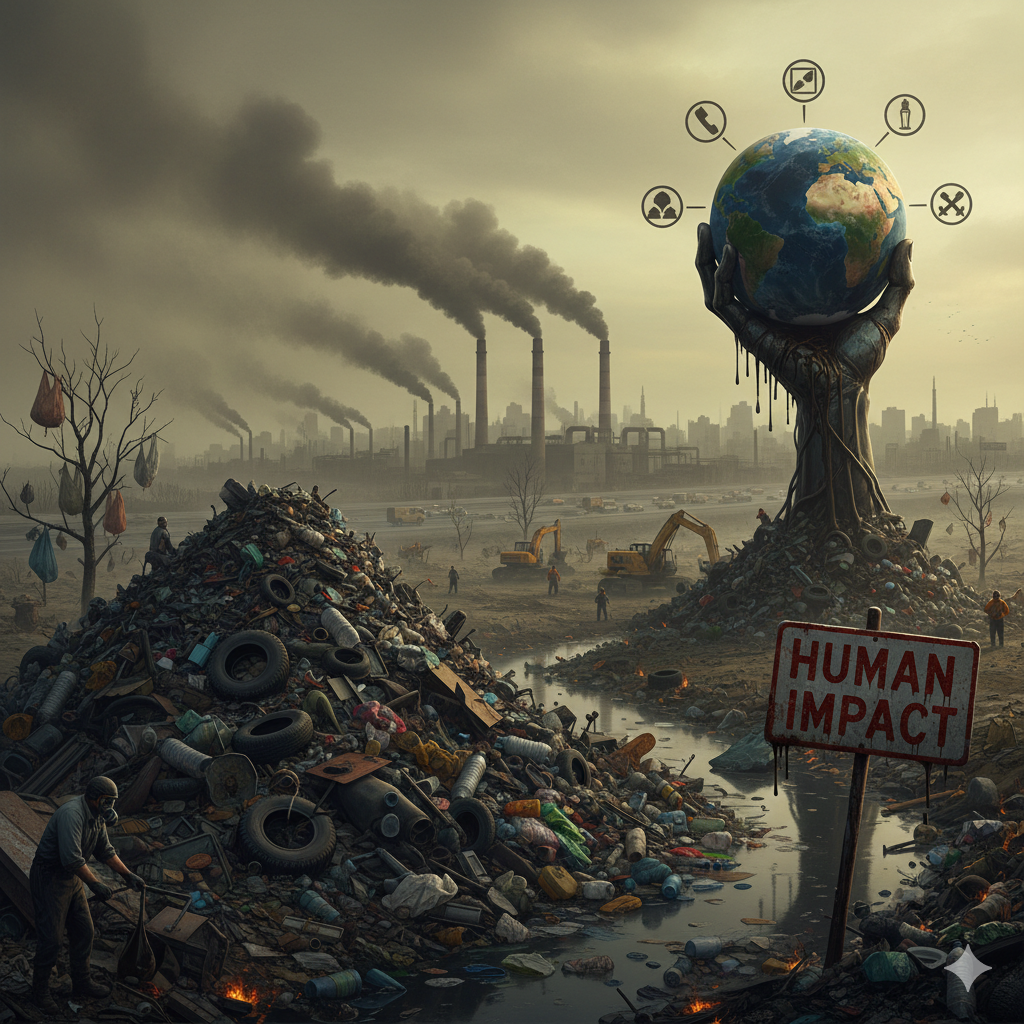
 Good day, brilliant debaters! Looking for powerful, ready-to-use points for your next debate? You’ve come to the right place. This template provides a complete script supporting the motion that “Humans are responsible for environmental pollution.”
First, let’s be clear. When we talk about “environmental pollution,” we mean the harmful contamination of our air, water, and land by substances that damage health and ecosystems. “Humans” refers to our collective activities—from industry to our daily habits.
A quick but important note: This article provides arguments for one side of an educational debate. It is not meant to completely dismiss other viewpoints but to help you build a strong, persuasive case. Use it as a foundation for your own brilliant ideas!
Now, let’s get into the winning points.
Winning Debate Points on Why Humans are Responsible for Environmental Pollution
1. Our Industrial Machinery is a Primary Polluter
My first point is the pollution from our factories and industries. Let’s be honest, nature doesn’t build smokestacks that belch black clouds into the air. Nature doesn’t drill for oil or operate smelting plants.
These are human inventions. In Nigeria, a staggering 70% of industries are located in Lagos, yet fewer than 10% have installed proper pollution treatment facilities . Just think about that. Metallic smelting companies alone contribute 9% of the city’s dangerous air emissions . This isn’t an accident; it’s a direct result of industrial choices. We built these machines. We operate them, often without the right controls. So, the resulting pollution lands squarely on our shoulders. It’s that simple.
2. Our Daily Choices Choke Our Cities and Waterways
Now, let’s talk about the pollution we see every day. Have you ever seen a heap of refuse on the street? Or plastic bottles blocking a drain? Who put them there? We did.
In Nigeria, we generate over 36 million tonnes of domestic waste a year . The problem is what we do with it. A huge amount is dumped illegally or burned openly, releasing toxic fumes. In Lagos alone, over 30% of daily waste is dumped at illegal sites, and much more is burned . This isn’t a natural disaster. It’s a human-made one. Our choice to discard waste improperly and our reliance on single-use plastics directly cause this visible degradation of our environment.
3. Our Thirst for Energy Poisons the Air We Breathe
My third point is about how we power our lives. Think about the endless traffic jams in our cities. The old cars with high sulphur content in their fuel are a major source of air pollution. In fact, road transport is a key source of dangerous PM2.5 particles in Lagos, accounting for 32% of the problem .
And what about when the power goes out? We all hear the roar of generators. The annual value of Nigeria’s generator market skyrocketed to $450 million by 2020 . These generators, along with the widespread burning of biomass for cooking, fill our air with pollutants. This directly leads to health crises. In 2019, air pollution was responsible for an estimated 70,000 deaths in Lagos alone . Our energy choices have a direct and tragic cost.
4. The Devastation in the Niger Delta is a Human-Created Crisis
Can we talk about the Niger Delta? For over 60 years, oil extraction—a human-led activity—has ravaged this region. Oil spills from pipelines, a result of both operational failures and sabotage, have poisoned the land and water .
The evidence is overwhelming. A major report from Amnesty International details how people in the Niger Delta have to drink, cook, and wash in polluted water . Their farmlands are destroyed. Their fisheries are contaminated. This isn’t a natural phenomenon; it is the direct outcome of human industrial activity and, at times, a failure to hold powerful corporations accountable . The Ogoni Nine were executed three decades ago for protesting this very destruction, a human tragedy stemming from a human-made environmental crisis .
5. We Have the Laws but Lack the Will to Enforce Them
Finally, let’s consider our response. We actually know how to fix this. Nigeria has environmental laws and agencies like NESREA set up to fight pollution . But what good is a law if it’s not enforced?
The government itself has admitted that inadequate funding and poor institutional capacity hinder its ability to protect our environment . This is a failure of human will. We have the knowledge and the frameworks, but we lack the collective commitment to implement them effectively. The pollution continues not because we can’t stop it, but because we, as a society, have not made it a non-negotiable priority.
Frequently Asked Questions (FAQs)
What is the strongest point against this motion?
The most common counter-argument is that natural events like volcanoes or dust storms also cause pollution.While true, their impact is sporadic and localized. Human pollution, on the other hand, is constant, widespread, and has become the dominant force altering our planet’s environment today.
How should I conclude this debate speech?
A strong conclusion should powerfully restate your main idea.You could say: “Honorable judges, opposing team, and fellow students, the evidence is clear. From the smog over our cities to the plastic in our waterways and the oil in our creeks, the fingerprints of human activity are everywhere. Therefore, we must proudly and confidently affirm that humans are indeed responsible for environmental pollution.”
Conclusion / Summary
To sum up, we have seen that human industry, our daily waste, our energy choices, specific ecological crises, and even our weak enforcement of laws all point to one undeniable conclusion: humans are the primary drivers of environmental pollution.
Remember, this script is designed for educational debate to sharpen your critical thinking and public speaking skills. All perspectives have their value. We hope this template gives you the confidence to excel in your competition!
What do you think? Drop your opinions in the comments section below… Also, feel free to share this post with your coursemates or those in your team