Online learning is better than classroom learning
Introduction
Good day, future champions! Looking for the winning points for your next debate? You’ve come to the right place.
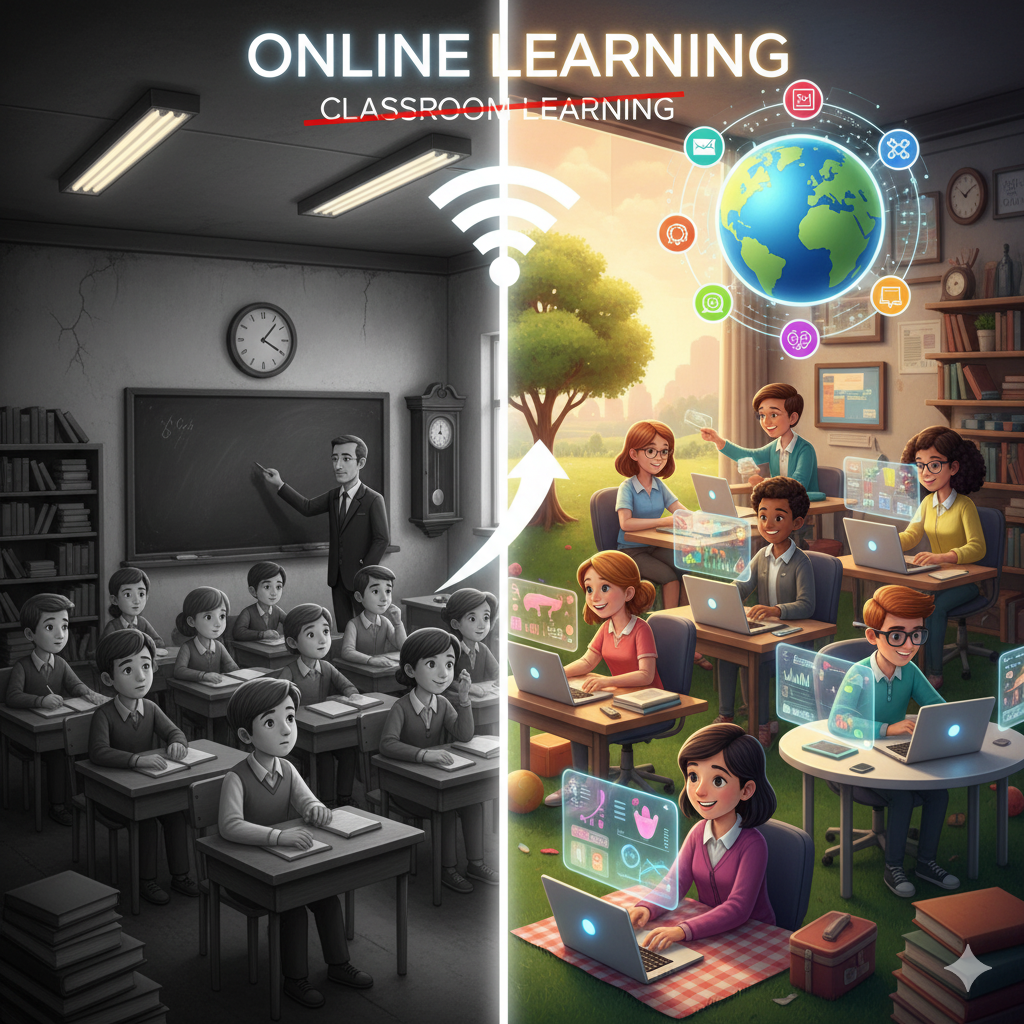
Today’s motion is: “Online Learning Is Better Than Classroom Learning.” This template provides you with a powerful script to argue in favor of this motion. Let’s be clear—by online learning is better than classroom learning, we mean an education model that uses digital tools and the internet to deliver instruction, offering a modern alternative to the traditional, physical classroom.
A quick but important disclaimer: This article is designed to provide strong arguments for one side of an educational debate. It is not meant to dismiss the value of classroom learning or the incredible work teachers do every day. All right, let’s get you ready to win!
Winning Debate Points on Why Online Learning is Better
Here is your ready-to-use script. Deliver these points with confidence and clarity.
### 1. Unbeatable Flexibility and Personal Freedom
My first point is control. Online learning gives me control over my own time. In a traditional classroom, the bell dictates my life. I have to be in a specific seat at a specific hour, whether I’m at my most alert or not.
But with online education? I can learn when I’m most focused. I can review a recorded lecture early in the morning or later in the evening. This flexibility is a game-changer. It means I can balance my academic work with family responsibilities, hobbies, or even personal revision for other subjects without feeling overwhelmed. It’s about learning to manage my own life, a skill that will help me long after I leave school.
### 2. A Deeper, More Personalized Learning Journey
Now, let’s talk about a one-size-fits-all approach. In a classroom of forty students, the teacher has to teach to the average. But what if I’m struggling? What if I already understand the topic? I either get left behind or I get bored.
Online learning shatters this old model. With online platforms, I can pause a lesson to take notes, or rewind a complex explanation until I truly get it. I am not forced to move at a pace set by others. This is what personalized learning is all about—an education that adapts to me, not the other way around. It allows me to focus on my weaknesses and strengthen my understanding, leading to better results .
### 3. Building Essential 21st-Century Skills
Let’s be honest about the world we live in. We are growing up in a digital age, and future employers will demand tech skills. Every single job is becoming a tech job in some way.
So, by using online learning platforms, I’m not just learning History or Mathematics. I am simultaneously becoming proficient with video conferencing tools, learning management systems, and online collaboration. I’m building digital literacy without even trying. Classroom learning simply cannot offer this direct, hands-on preparation for the modern workforce. I’m not just learning for school; I’m learning for life .
### 4. Breaking Down Physical and Economic Barriers
Imagine a student in a remote village. Their local school might not have a qualified physics teacher. Now, imagine that same student being able to log on and learn from the best physics teacher in Lagos. That is the power of online learning.
It makes quality education accessible to everyone, regardless of their location or economic background. It eliminates the need and cost for long commutes or relocating to a big city for a good school. Plus, digital learning materials are often cheaper than a pile of physical textbooks. This isn’t just convenient; it’s a revolution in making quality education a right, not a privilege .
### 5. A Safer, More Focused Learning Environment
Every student deserves to feel safe and able to concentrate. In a crowded classroom, distractions are everywhere—from classmates chatting to general noise. For some students, this social pressure can be overwhelming and make learning difficult.
Online learning provides a safe space. I can learn from the comfort of my home, a known and comfortable environment. This leads to better concentration and a more positive attitude toward education. During times of public health concerns, like we saw during the pandemic, it also ensures that my education continues without interruption, keeping me safe while I learn .
### 6. Instant Feedback and a World of Resources
In a traditional system, I might wait days or even weeks to get a test back. By then, I’ve probably forgotten what I was even thinking during the exam. How does that help me improve?
Online learning platforms often provide immediate feedback. I can take a quiz and know my results right away, understanding where I went wrong instantly. This is a powerful tool for growth. Furthermore, I have the entire internet at my fingertips—video lessons, interactive simulations, and digital libraries. My learning isn’t confined to a single textbook; it’s connected to a global repository of knowledge .
### 7. A Direct Solution to Our Local Challenges
We must face the facts in Nigeria. Our public schools are often overcrowded, with a severe teacher shortage. UNESCO reports we need over a million more teachers. In some classrooms, it’s one teacher to fifty students. How can anyone learn effectively in that environment?
Online education is a practical, scalable solution to this crisis. One expert tutor can teach thousands of students online, reaching places where qualified teachers aren’t available. Platforms are already springing up to help students prepare for WAEC and JAMB. This isn’t just a minor benefit; it’s an urgent answer to a national problem, ensuring every Nigerian child can get the quality education they deserve .
Frequently Asked Questions (FAQs)
What is the strongest point for the other side?
The most common and strongest point against online learning is the issue of poor internet connectivity and the digital divide in some parts of Nigeria. Acknowledge this, but be ready to counter it by saying that the solution is to invest in and improve this infrastructure for the future, not to reject the superior model of learning. The government’s push for digital literacy shows this is the direction we are heading .
How should I conclude my speech?
End with power. Summarize your two or three strongest points. Then finish with a forward-looking statement like: “The classroom was the solution of the 20th century, but online learning is the tool for the 21st. It is flexible, personalized, and builds the skills we need for tomorrow. I urge you all to embrace the future and vote in support of the motion.”
Conclusion / Summary
Let’s recap the winning arguments. We’ve discussed how online learning is better than classroom learning because it offers unmatched flexibility, personalized pacing, and critical tech skill development. It breaks down barriers of location and cost, creates a safer learning space, provides instant feedback, and directly addresses Nigeria’s teacher shortage.
Remember: This is a debate script designed to help you argue one side effectively. It is not meant to devalue the dedication of our hardworking teachers or the importance of traditional schools. Both modes have their place in education.
What do you think? Drop your opinions in the comments section below! Let’s get a discussion going. Also, feel free to share t
his post with your classmates or those in your debate team! Good luck!