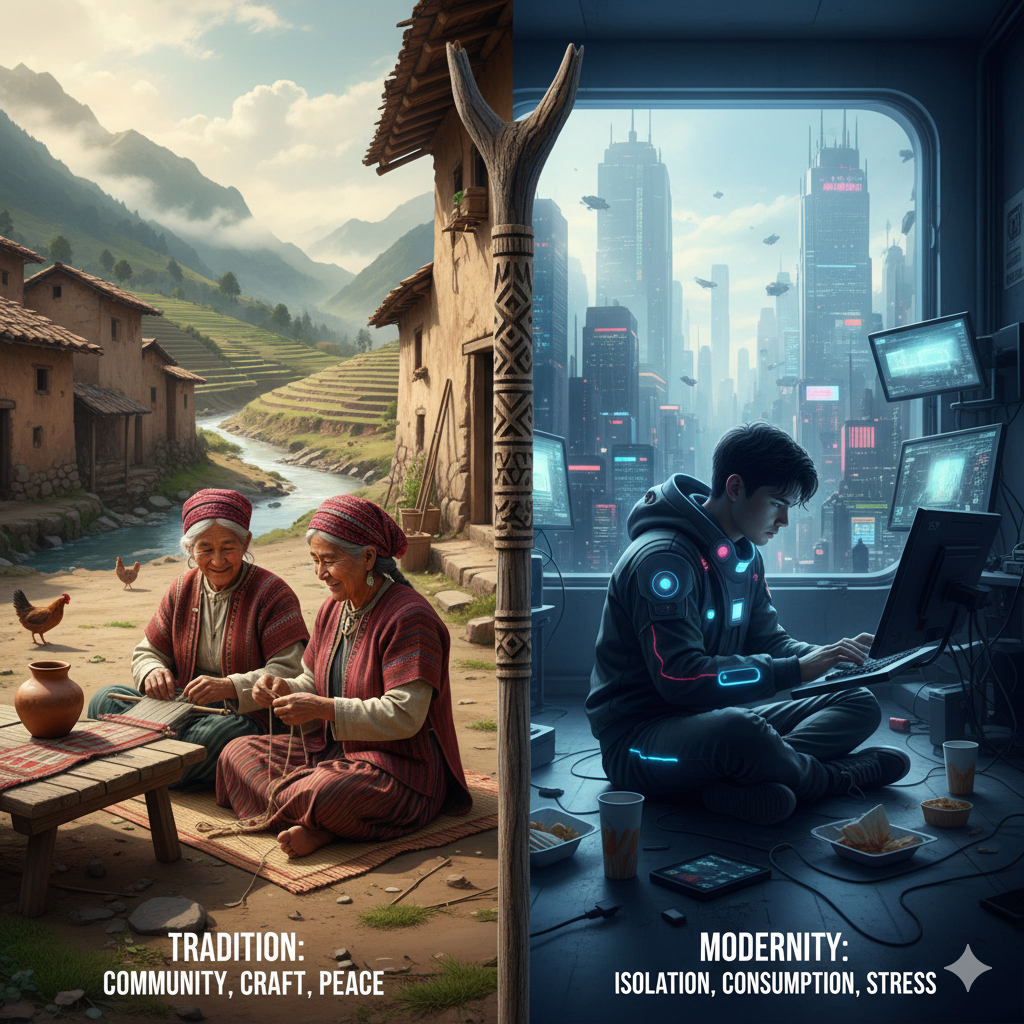
Traditional culture is better than modern lifestyle
 Good day, future champions! Looking for powerful, ready-to-use points for your next debate? You’ve landed in the right place. This article provides a complete script supporting the motion that Traditional culture is better than modern lifestyle.
Let’s get straight to it. For this debate, “traditional culture” means the long-standing customs, values, and social practices handed down through generations. “Modern lifestyle” refers to contemporary, often globalized, ways of living influenced by technology and rapid change.
A Quick Disclaimer: This article is written to provide strong arguments for one side of an educational debate. It is not meant to dismiss the value of progress or modern achievements. Both traditional and modern ways of life have their merits!
Now, let’s get you that win.
Winning Debate Points on Why Traditional Culture is Better
Here are your seven winning points, written as if you are delivering them at the podium.
1. The Unbreakable Family Unit
My first point is about strength. Traditional culture gives us the unbreakable family unit. It is the central institution of our society, the pillar that holds everything together . In our traditions, families gather to celebrate births, weddings, and even to mourn during funerals, ensuring no one faces life’s joys or sorrows alone .
Think about it. How many people today feel isolated and lonely despite all their online connections? The modern lifestyle often pulls families apart as people chase individual dreams in different cities. But our culture calls us back together. It reminds us that we belong to something bigger than ourselves. That is a strength no modern convenience can replace.
2. A Rich and Authentic Identity
My second point is about knowing who you are. Traditional culture provides a rich and authentic identity that no modern trend can offer. It connects us to our roots through powerful practices like the Yoruba Oríkì (praise poetry) and the Igbo Iri Ji (New Yam Festival) . These are not just events; they are living lessons about our history and our ancestors’ wisdom.
Without this, what do we have? A homogenous, globalized identity that looks the same everywhere. We risk becoming a generation that knows everything about the world except our own home. Our traditions are the heartbeat of our society, preserving a unique heritage for our children and our children’s children .
3. Proven Health and Wellness Practices
Let’s talk about your health. Traditional culture offers proven health and wellness practices that care for the whole person—body and mind. For centuries, our communities have used indigenous herbs like neem, moringa, and bitter leaf to treat ailments, and science is now validating their efficacy .
This is holistic care. It’s not just about swallowing a pill. It’s about dietary practices centered on unprocessed, local foods . It’s about using dance and communal farming for physical exercise . The modern lifestyle, with its processed food and sedentary habits, is causing new health issues. Our traditions already have the answer: a balanced life connected to nature.
4. Deep-Seated Moral Values
Now, consider your character. Traditional culture instills deep-seated moral values that guide us for life. Our elders use storytelling, proverbs, and folklore to teach us unforgettable lessons about resilience, honesty, and respect . Imagine growing up hearing Hausa tales about loyalty or Igbo fables about integrity—these stories shape your conscience.
The modern world can be confusing, with moral lines often blurred. But our culture provides a clear compass. It gives us a foundation of good character that helps us navigate any challenge. This moral guidance is a precious gift that keeps us grounded and upright.
5. Real Community Over Virtual Networks
This is crucial. Traditional culture builds real, lasting community, not just virtual networks. Our traditions are community-focused, bringing people together for celebrations, harvests, and religious observances . This creates a powerful sense of belonging and unity that strengthens our social bonds.
The modern lifestyle, for all its connectivity, often leaves people feeling lonely. You can have a thousand friends online but no one to help you in a real crisis. Our culture ensures that everyone is valued and supported. It creates a safety net of genuine relationships that you can truly count on.
6. Effective Peace and Conflict Resolution
My next point is about harmony. Traditional culture provides effective tools for peace and conflict resolution that maintain social harmony. In many communities, village elders act as custodians of wisdom, mediating disputes using time-tested methods and proverbs to convey understanding and restore peace .
This method focuses on reconciliation, not just punishment. It aims to heal relationships and ensure mutual respect without lasting resentment . The modern justice system can be slow and impersonal. Our traditional approach is swift, wise, and community-oriented. It’s a smarter, more humane way to resolve conflicts and keep our society united.
7. Stability in a Chaotic World
Finally, in a world that’s changing too fast, traditional culture provides essential stability. It is an anchor, reminding us of our roots and giving us a sense of permanence . Even when urban families adopt modern ways, returning to their villages for major festivals maintains a vital link between the old and the new .
This balance is everything. It allows us to embrace the good in modernity without losing our soul. Our traditions are the foundation that keeps us steady. They provide the coherence and safe space we need to thrive, no matter how chaotic the world becomes .
Frequently Asked Questions (FAQs)
Here are answers to a couple of questions you might have.
What is the strongest argument for the other side?
The most common argument for a modern lifestyle is the convenience of technology,especially for communication and access to information. In your rebuttal, you can argue that while technology is a useful tool, it often comes at the cost of the deep, meaningful relationships and moral framework that traditional culture provides. Efficiency does not equal a better quality of life.
How should I conclude my speech?
Your conclusion should be powerful and memorable.Briefly restate your strongest points—that tradition provides identity, family strength, and moral values. End with a final, thought-provoking statement, like: “Mr. Speaker, the modern world offers us many gadgets, but it is our traditional culture that gives us a soul. It offers us a compass, not just a map. For a future that is not just prosperous, but also meaningful, I urge you to uphold our timeless values.”
Conclusion / Summary
To recap, we have argued that traditional culture is superior because it provides: (1) A strong family unit, (2) A rich identity, (3) Holistic health practices, (4) Strong moral values, (5) Genuine community, (6) Effective conflict resolution, and (7) Crucial stability.
Final Disclaimer: This debate template was created for educational purposes to help students prepare for competitions. It is not intended to diminish the importance of innovation and progress, which also play a vital role in our world.
What do you think? Drop your opinions in the comments section below! Let me know what other debate topics you need help with. Also, feel free to share this post with your coursemates or those in your team