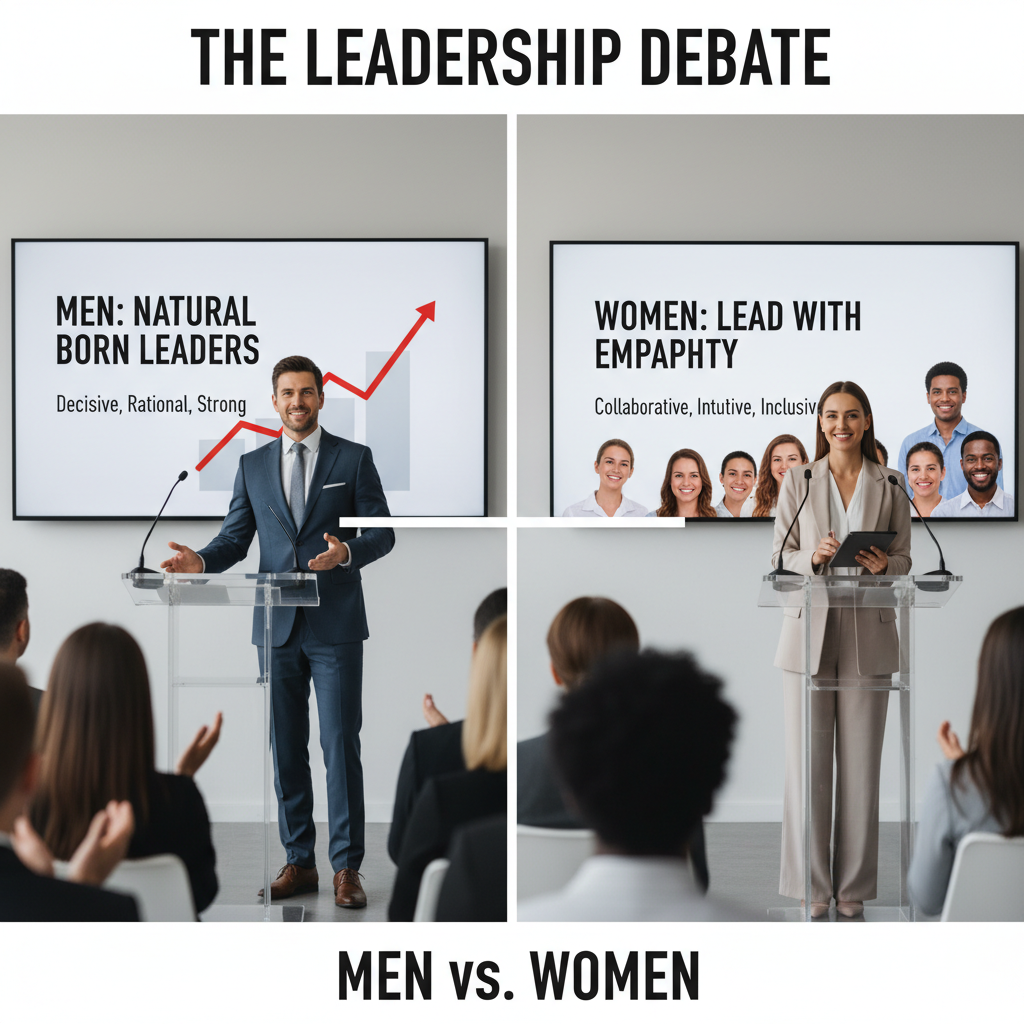
Men are better leaders than women
 Good day, future leaders and brilliant debaters! Looking for powerful, ready-to-use points for your next debate? You’ve landed in the right place. This template provides a strong script for anyone supporting the motion: “Men are better leaders than women.”
First, let’s be clear. Leadership is about guiding people and making decisions. An effective leader is someone who can steer a group towards a common goal. Now, let’s get into the arguments.
Important Disclaimer: This article is created for educational debate purposes only. It presents one side of a complex argument to help students prepare for competitions. It is not intended to undermine the incredible contributions of female leaders worldwide, all of whom are vital to our society. The aim here is to provide a script for a specific debate stance.
Winning Debate Points on Why Men Are Better Leaders Than Women
Here are your five winning points, written as if you are delivering them at the podium. Speak them with confidence and conviction!
1. The Natural Advantage in Decisive Action
My first point is about natural decisiveness. In leadership, hesitation can be costly. Leaders often need to make tough calls quickly, with limited information. Think about it. Men are generally more conditioned for this kind of direct, swift decision-making. We see this in high-pressure environments, from the boardroom to the battlefield. It’s not about being rash; it’s about the ability to cut through complexity and act. This is a crucial trait for effective leadership, especially during a crisis. When a company needs a major restructuring or a nation faces a security threat, this ability to act without being paralyzed by emotion is invaluable. It’s that simple.
2. Emotional Stability in High-Pressure Situations
Now, let’s talk about emotional composure. A leader must be a rock. They carry the weight of the entire team’s anxieties and fears. The truth is, men are often more emotionally stable under extreme stress. This isn’t a guess. Studies have linked testosterone to lower cortisol responses, meaning men may be biologically wired for calmer reactions in a crisis. Imagine a pilot navigating terrible turbulence or a CEO managing a public relations disaster. Panic is contagious. A leader who remains calm, whose judgment isn’t clouded by emotional surges, inspires confidence and keeps the ship steady. This emotional stability is a non-negotiable leadership quality.
3. Innate Assertiveness and Commanding Presence
Another key point is natural assertiveness. Leadership requires you to command respect and direct a team firmly. Let’s be honest, men are typically more assertive. This isn’t about being loud or aggressive. It’s about an innate confidence to state a position, set a direction, and ensure the team follows. This commanding presence is often what prevents chaos and keeps everyone aligned. In traditional leadership settings, from politics to large corporations, this assertiveness is what projects strength and authority. A group looks to its leader for a clear, strong voice. That’s what gets results.
4. The Biological Drive for Risk and Innovation
But here’s the thing—great leadership isn’t just about maintaining order. It’s also about taking bold risks to achieve greatness. Men have a biological drive for risk-taking. This has been a driving force behind human exploration, innovation, and enterprise throughout history. Starting a new business venture? Investing in a groundbreaking but unproven technology? These are huge gambles. A leader with a higher tolerance for risk is more likely to seize these opportunities and push boundaries. This fearless approach to decision-making is what transforms societies and builds empires. It’s the engine of progress.
5. A Proven Track Record Throughout History
My final point is about the evidence of history. Look at the world around us. For centuries, the vast majority of the world’s political, military, and industrial leaders have been men. This isn’t a coincidence. It’s a testament to a long-standing, proven model of traditional leadership. From Winston Churchill leading Britain through war to the founders of the world’s largest tech companies, the historical record is clear. This track record shows that the classic masculine leadership qualities—decisiveness, assertiveness, and emotional control—have consistently produced results that shape our world. We trust what has been proven to work.
Frequently Asked Questions (FAQs)
What is the strongest argument against this motion?
The strongest counter-argument is that leadership is about competence,vision, and empathy—not gender. They will likely argue that many successful female leaders, like Angela Merkel or Ngozi Okonjo-Iweala, have shown that these qualities are not exclusive to men.
How should I conclude my speech?
End with power.Summarize your main points: “In conclusion, Mr. Speaker, the natural decisiveness, emotional stability, proven assertiveness, risk-taking drive, and historical track record firmly establish that men are better leaders than women. While women are exceptional in many fields, the unique pressures of top-tier leadership are better handled by the masculine disposition. Thank you.”
Conclusion / Summary
To wrap it up, the arguments for this side of the motion are strong. We’ve looked at decisive action, emotional control, natural assertiveness, a biological affinity for risk, and the undeniable lessons of history. These points make a compelling case.
Final Disclaimer: Remember, this debate template is a tool for academic exercise. It in no way seeks to disparage the immense value, intelligence, and capabilities of women in all spheres of life, including leadership. Many brilliant women are exceptional leaders, and this article is solely for the purpose of winning a structured debate.
What do you think? Do you have a different perspective? Drop your opinions in the comments section below! Also, feel free to share this post with your coursemates or those in your debate team!
—