Continuous Assessment Is Better Than Final Exams
 Good day, future champions! Looking for powerful, ready-to-use points for your next debate? You’ve landed in the right place. Today, we’re tackling the popular motion: “Continuous assessment is better than final exams.”
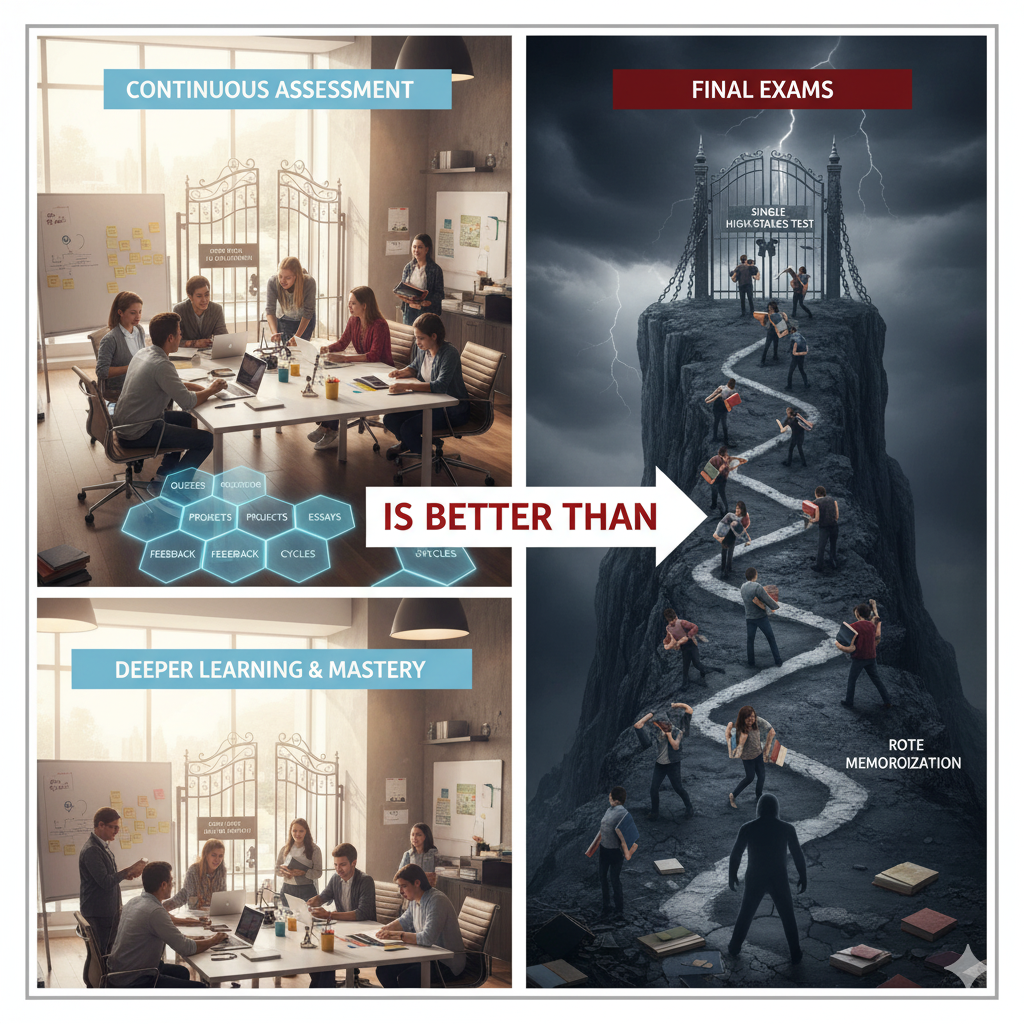
Let’s be clear. When we say continuous assessment, we mean the ongoing process of evaluating a student’s learning progress through classwork, projects, quizzes, and presentations throughout a term. A final exam is that single, high-pressure test at the end.
A Quick Note: This article provides a script for one side of an educational debate. It’s not meant to say final exams are useless. Both have their place, but today, we’re making the winning case for why continuous assessment is better than final exams.
—
Winning Debate Points on Why Continuous Assessment is Better
Here are your five winning points, written as if you’re delivering them at the podium. Speak with confidence!
1. It Gives a True Picture of a Student’s Ability
My first point is simple: a single exam can’t tell the whole story. Think about it. Anyone can have a bad day. You might fall sick, feel overly anxious, or just not understand one particular question paper. Should that one day define your entire term’s effort? Of course not!
Continuous assessment is better than final exams because it tracks your progress over weeks and months. It looks at your class participation, your project work, and your consistent effort. This is what we call a holistic evaluation. It shows your real strengths and where you genuinely need to improve. A final exam is just a snapshot; continuous assessment is the entire video of your learning journey.
### 2. It Reduces Crippling Exam Anxiety and Pressure
Let’s talk about stress. We’ve all felt it—that overwhelming fear as the final exam approaches. Your palms sweat. Your mind goes blank. This pressure isn’t just unpleasant; it actually prevents you from showing what you know. It’s a unfair barrier to real learning.
Now, imagine a different system. With continuous assessment, the weight isn’t on a single, terrifying event. Your grade is built piece by piece. A small quiz here, a project there. The pressure is spread out and manageable. This approach is fairer. It allows you to perform in a calmer state of mind, which leads to results that truly reflect your knowledge. According to a report by the World Health Organization on student mental health, academic pressure is a significant stressor for young people, and alternative assessment methods can help.
### 3. It Focuses on Understanding, Not Just Memorization
Here’s the big problem with final exams: they often reward cramming. You can memorize formulas and dates the night before, pour them onto the exam paper, and then forget everything the next day. What kind of learning is that? It’s shallow and doesn’t help you in the long run.
Continuous assessment, especially through project-based learning, forces you to understand concepts. When you work on a project throughout the term, you have to research, apply knowledge, and solve problems. This is authentic learning. It develops critical thinking skills you’ll use for life. You’re not just memorizing; you’re actually understanding. This method tracks your student learning progress in a way a final exam never could.
### 4. It Provides Constant Feedback for Improvement
What happens after a final exam? You get your result, and that’s it. There’s no chance to learn from your mistakes. It’s a dead end. But learning is all about growing from feedback.
This is a key benefit of continuous assessment. When you submit a classwork assignment or a mid-term project, you get feedback from your teacher. You find out what you did well and where you went wrong. And then you get a chance to do better on the next task! This ongoing cycle of feedback and improvement is how real, lasting learning happens. It turns mistakes into valuable lessons, not just into red marks on a paper.
### 5. It Caters to Different Talents and Learning Styles
We are not all the same. Some students are brilliant writers. Others are great at presentations. Some excel at practical, hands-on work. A final exam? It typically tests only one or two skills, like writing quickly under pressure. That’s not fair to everyone.
A fair assessment system recognizes our differences. Continuous assessment allows for variety. Your grade can come from a written report, an oral presentation, a group project, or a creative portfolio. This way, every student has a chance to shine and show their knowledge in a way that suits them best. It’s a more inclusive and ultimately more accurate way to measure a student’s true potential.
—
Frequently Asked Questions (FAQs)
What is the strongest point for the other side (supporting final exams)?
The most common argument for final exams is that they prepare students for future one-off, high-stakes tests, like university entrance exams or professional certification tests. They argue it builds resilience.
How should I conclude this debate speech?
A strong conclusion should briefly restate your main points. You could say: “In summary, Mr. Speaker, while final exams have their place, continuous assessment provides a fairer, less stressful, and more accurate measure of a student’s true ability and understanding. It prepares us not just for a test, but for a lifetime of learning. For these powerful reasons, I firmly rest my case that continuous assessment is indeed superior.”
Can I use both continuous assessment and final exams together?
Absolutely! Many modern educational systems use a blended approach. The key is giving more weight to the continuous, formative assessment to truly support learning, rather than letting everything hinge on a single summative assessment at the end.
—
Conclusion / Summary
To wrap it up, we’ve seen that continuous assessment offers a superior path to genuine education. It provides a true picture of a student’s ability, reduces unhealthy pressure, promotes deep understanding over cramming, offers vital feedback, and celebrates diverse talents.
Remember: This is a debate script for academic purposes. Both assessment methods are tools used in education, and this article is designed to help you argue one side effectively.
What do you think? Do you have a winning point to add? Drop your opinions in the comments section below! Also, feel free to share this post with your classmates or those in your debate team! Good luck!