Is parental supervision equivalent to parental control — is one better than the other?
 Debate: Parental Supervision vs. Control – Which is Better? (5 Winning Points)
Hey there, debaters and future leaders! Ready for a topic that hits close to home for every student? You’ve found the perfect script. Today’s motion is: Is parental supervision equivalent to parental control — is one better than the other?
This template provides the winning arguments that supervision is fundamentally better than control. This script is written for you to deliver a clear, convincing case that every parent and teen in the room will understand. Remember, this is for educational debate. All parenting involves care, but our task is to distinguish between two very different approaches.
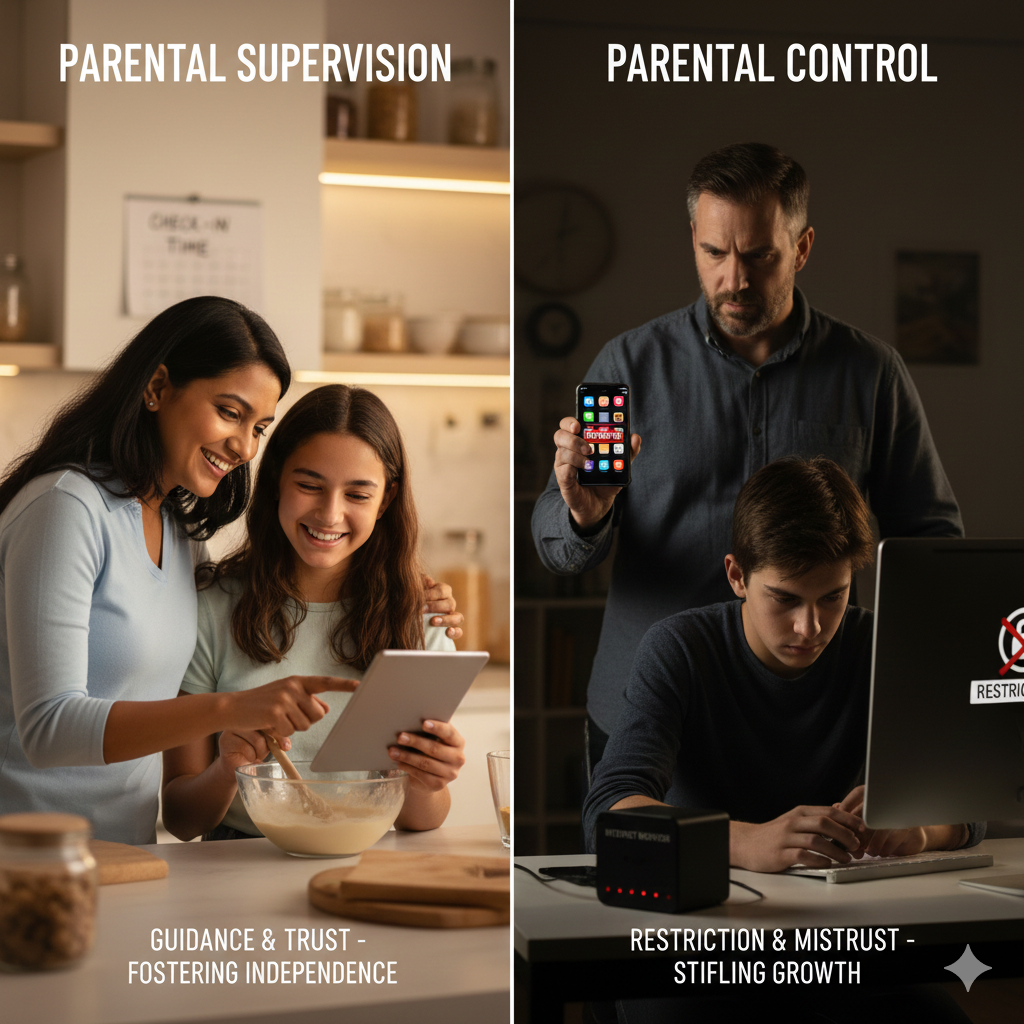
Let’s define our terms simply. Parental supervision means guiding, monitoring, and being involved in a child’s life to ensure their safety and well-being. It’s like being a coach. Parental control means dictating, restricting, and making all decisions to enforce obedience. It’s like being a commander. The core question is: which method actually helps a child grow into a capable, responsible adult?
Now, take the podium. Here is your winning argument.
Winning Debate Points on Why Supervision is Better Than Control
1. Supervision Guides, Control Dictates – The Intent is Everything
My first point is about the heart of the matter: intent. What’s the goal? Parental supervision comes from a place of love and guidance. Its intent is to teach. A supervising parent sets boundaries, sure, but they also explain the “why.” They say, “Be home by 10 PM because it’s safe, and we trust you.”
Parental control, on the other hand, comes from a place of fear and authority. Its intent is to command obedience. It says, “Be home by 10 PM because I said so.” No explanation. No dialogue. One method builds understanding; the other builds resentment. From the very start, supervision is about partnership, while control is about power. Which relationship would you rather have?
2. Control Stunts Growth, Supervision Builds It
Let’s talk about results. What happens to a child under each style? Excessive control, often called helicopter parenting, does one thing very well: it creates dependency. When every decision—from what to wear to what friends to have—is made for them, children never learn to think for themselves. They don’t develop critical thinking skills or internal motivation.
Supervision is different. It allows for safe, age-appropriate independence. A supervising parent might let their teen choose their own project topic, offering help if asked. This builds decision-making muscles. The Centers for Disease Control and Prevention (CDC) states that a supportive home environment is crucial for healthy adolescent development. Supervision provides that support while gradually letting go. Control builds a follower for today; supervision builds a leader for tomorrow.
3. Supervision Builds Trust and Open Communication
Think about this. If you’re constantly controlled, do you run to your parents with a problem or away from them? Control shuts down communication. It teaches kids to hide mistakes for fear of harsh punishment. Secrets grow in that kind of silence, and small problems can become big crises.
A supervised child knows their parent is a safe harbor. They’re more likely to say, “Dad, I messed up on this test,” or “Mom, something weird happened online.” Why? Because the response will be a conversation, not a explosion. Supervision builds a bridge of trust. Control builds a wall of fear. For a parent’s greatest tool—knowing what’s happening in their child’s life—supervision is the only effective way.
4. The Real World Requires Judgment, Not Just Obedience
Here’s a hard truth. The world outside your home doesn’t work on control. University professors, bosses, and life itself won’t give orders for every step. They expect initiative and sound judgment. A child raised under strict control is trained for one thing: to obey an external authority. Once that authority is gone, they can feel lost or make reckless choices just to taste freedom.
Supervision prepares a child for that real world. By making choices within guided limits, they learn cause and effect. They learn to assess risk, to listen to their own conscience, and to stand firm when peer pressure comes. Supervision doesn’t just protect a child from the world; it equips them to navigate it confidently. We’re raising future adults, not permanent toddlers.
5. Supervision Adapts, Control Remains Rigid
Finally, good parenting isn’t a one-size-fits-all rulebook. It’s a dynamic relationship. Authoritative parenting—which is essentially intelligent supervision—is responsive. It adapts to the child’s age, maturity, and the specific situation. Rules for a 13-year-old shouldn’t be the same as for a 17-year-old. Supervision understands that.
Control is rigid. It’s about enforcing the rule for the rule’s sake, regardless of context. This rigidity often leads to explosive conflicts during the teenage years, when the drive for autonomy is strongest. Supervision respects the child’s growing personhood. It says, “I see you maturing, so your responsibilities and freedoms will mature too.” That flexibility is the mark of true strength and wisdom in parenting.
—
Frequently Asked Questions (FAQs)
Q: What’s the opposition’s strongest argument?
A:They will argue, “Control is necessary for safety and discipline in a dangerous world! Without strict rules, children will go astray.” Your counter is direct: “Supervision provides safety with understanding. It’s the difference between teaching a child to look both ways before crossing the street (supervision) and simply banning them from ever crossing a street (control). One creates a cautious, aware individual. The other creates an incapable one who will stumble dangerously the first chance they get. Which is truly safer in the long run?”
Q: How do I conclude this debate powerfully?
A:Appeal to shared values. Try this: “Honorable judges, my opponents are not wrong to want to protect children. Every good parent does. But we must ask: are we protecting them just for childhood, or for life? Supervision is the tool that does both. It protects them now with guidance and protects their future by building capability. Let us choose the method that doesn’t just raise obedient children, but nurtures resilient, thoughtful, and independent adults. The goal isn’t control. The goal is a child who one day no longer needs your supervision because you have taught them how to supervise themselves. Thank you.”
Conclusion / Summary
In summary, parental supervision is superior to control because it guides rather than dictates, builds lifelong skills rather than dependency, fosters open communication and trust, prepares children for the real world, and adapts wisely as the child grows. It represents a parenting philosophy focused on empowerment and long-term development.
Disclaimer: This template is for educational debate practice only. It argues one side of a nuanced parenting discussion to develop critical thinking and public speaking skills. It acknowledges that all parents act from care and that cultural contexts may vary.
What do you think? Does supervision strike the right balance? Drop your own experiences or counter-arguments in the comments below! Be sure to share this post with your teammates and classmates preparing for this debate.