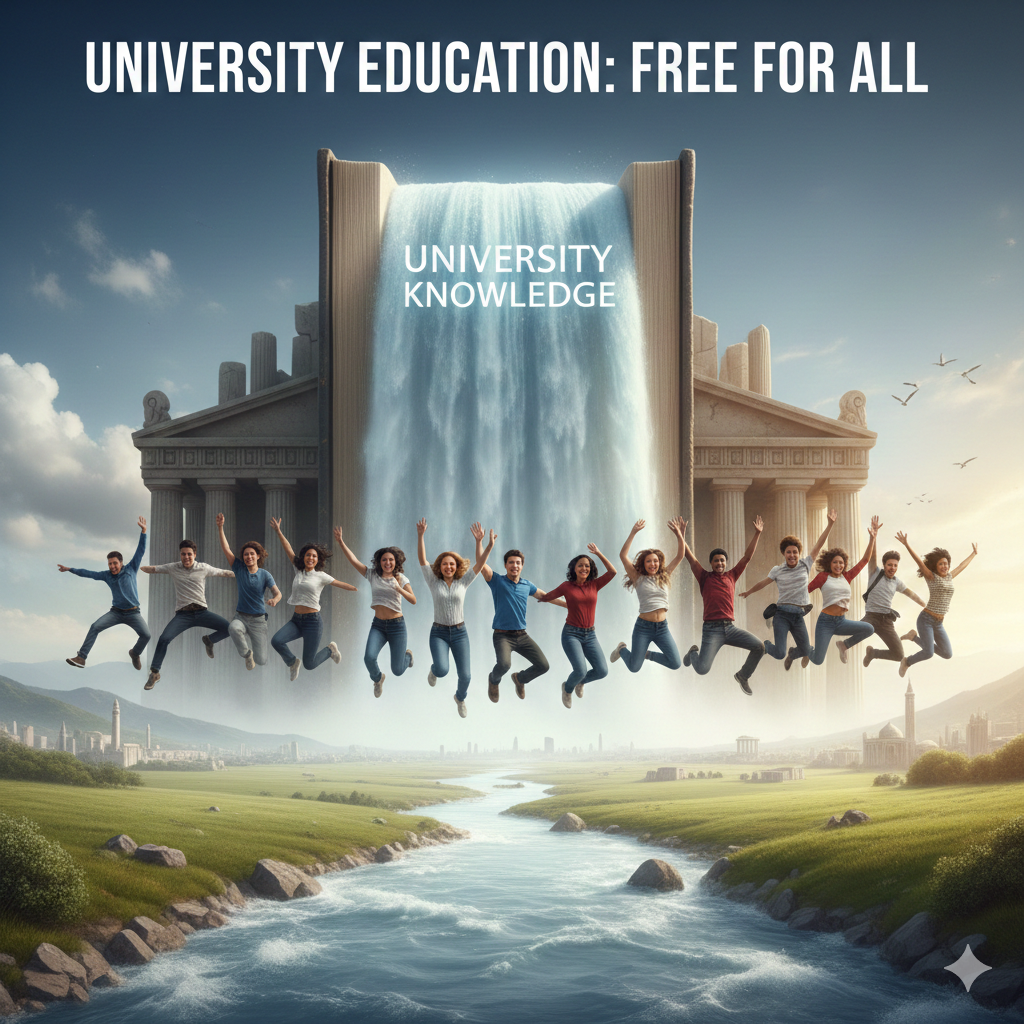
Should university education be free for all
 Excellent. You’ve come to the perfect place. Today, I’ve prepared a powerful, persuasive, and ready-to-use script arguing in support of the motion. This isn’t just theory; these are the winning points delivered with the confidence you need at the podium.
Let’s get you ready to win that debate.
Introduction: Defining the Motion for Progress
Good day, future leaders and brilliant debaters!
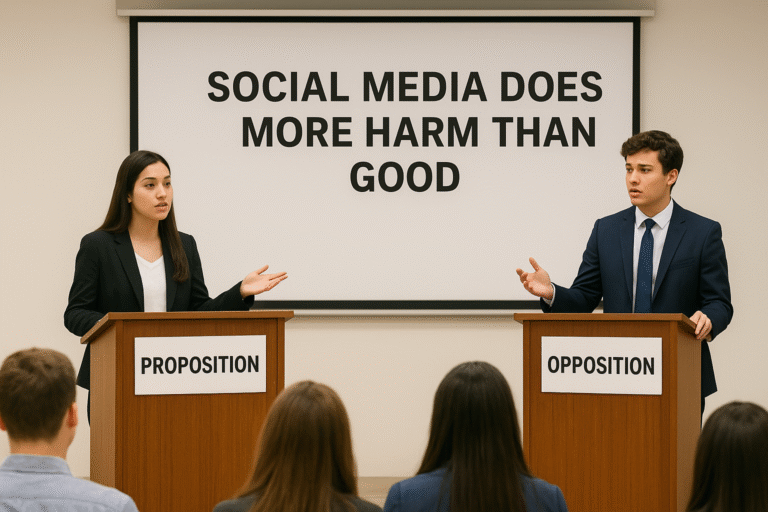
The motion before us is one of national importance: “Should university education be free for all?” We, as the proposition, stand firmly in support. We believe that removing the financial barrier to tertiary education is not just a social good, but a critical investment in Nigeria’s future.
Let’s be clear on terms. “Free university education” means the government bears the primary cost of tuition fees at public institutions, ensuring no qualified student is denied access due to an inability to pay. This is about opportunity, not entitlement. It’s about unlocking the vast potential currently locked away by poverty.
A Crucial Disclaimer: This template provides strong arguments for one side of an academic debate. We acknowledge the dedication of all professions and the complexity of funding discussions. Our aim is purely educational—to equip you with persuasive points for intellectual competition.
Now, let’s move to the winning arguments.
Winning Debate Points on Why University Education Should Be Free for All
Here is your complete script. Deliver these points with conviction.
1. My First Point: It is a Powerful Engine for Economic Mobility and Breaks the Cycle of Poverty
My first and most vital point is this: free university education is the most effective ladder we have for lifting families out of poverty and creating a fairer society.
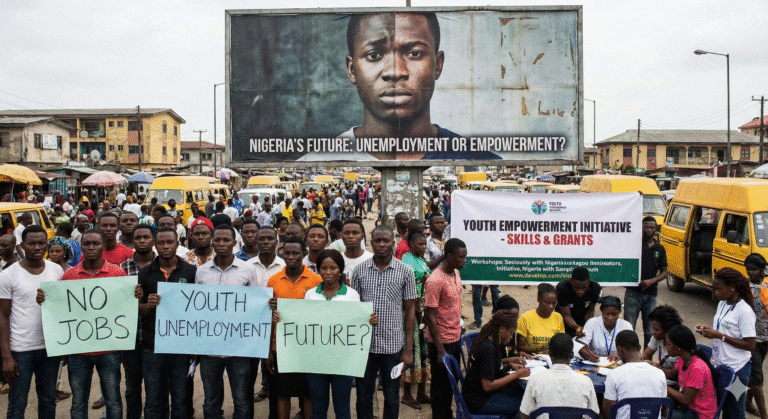
Think about the reality for millions of brilliant Nigerian students today. You might pass your WAEC with flying colours, you might have the dream to be an engineer or a doctor, but then you see the tuition fees. For many families, that’s the end of the dream. It’s that simple. Poverty becomes a permanent barrier, and talent is wasted. This isn’t just a theory. Data shows that in societies with greater access to education, children earn significantly more than their parents, breaking intergenerational poverty. When you make university tuition-free, you tell every child, regardless of their parents’ income, that their future is determined by their hard work, not their family’s bank account.
Now, let’s talk about the alternative. When we lock out smart, capable students because they can’t pay, what happens? We create a society where wealth, not merit, decides who leads. We lose the next great inventor from a rural village. We miss the future tech entrepreneur from a low-income home. Free tertiary education ensures Nigeria’s progress is powered by its best minds, not just its richest families. It is the foundation of true meritocracy.
2. My Second Point: It is a Strategic Investment in National Development and Human Capital
My second argument is about national self-interest. Funding free university education isn’t an expense; it’s the smartest investment Nigeria can make in its own future.
Every economist agrees that a nation’s greatest resource is its people—its human capital. Right now, Nigeria is ranked 162nd out of 190 countries on the Human Capital Index. We are not reaching our potential. Why? Because we are not fully educating our population. Studies show that each additional year of schooling raises a person’s future earnings, and collectively, this builds a wealthier, more stable nation. A graduate becomes a higher taxpayer, a more productive professional, and a more informed citizen. They contribute far more to the economy over their lifetime than the cost of their education.
But here’s the urgent problem. Our national tertiary gross enrollment ratio is only about 12%. That means a tiny fraction of our youth are accessing the skills needed for a modern economy. How can Nigeria compete in a global world driven by technology and innovation with such low numbers? We can’t. By making university education free, we would dramatically increase this number. We would build the massive, skilled workforce needed to attract international investment, drive innovation, and solve our own national challenges. This is how we build national wealth from the ground up.
3. My Third Point: It Reduces Crippling Debt and Unleashes Young Graduates to Build the Economy
My third point addresses a growing crisis: the debt trap. Even the current “affordable” fees, when combined with living costs, force students and families into terrible debt or prevent enrollment entirely. This burden shapes lives for decades.
Imagine graduating. Your energy should go into building your career, starting a business, or furthering your studies. But if you’re buried under debt, your choices vanish. You take the first job you can get just to make repayments, not to follow your passion. You delay starting a family, buying a home, or investing. This debt stifles the very economic activity we need. Evidence from other countries shows that high student debt reduces entrepreneurship, home ownership, and consumer spending. We are crippling our own economic engine before it even starts.
Free university education changes this script completely. A graduate entering the workforce debt-free is a powerhouse for the economy. They can innovate. They can spend. They can take calculated risks. They contribute to the tax base immediately. Look at the historical example of the American G.I. Bill, which provided free college to veterans. It is widely credited with creating a massive, vibrant middle class and fueling decades of economic growth. That is the power we can unlock. We must free our youth from debt to free them to build our nation.
4. My Fourth Point: It Has Proven Successful Historically and Can Be Implemented Practically
My final point tackles the “how.” Opponents will say it’s impossible. I say we have a blueprint. Free or highly subsidized public university education is not a radical fantasy; it is a proven model with deep historical roots.
Let’s look at facts. In the United States, public colleges and universities were often free at their founding. The famous 1944 G.I. Bill provided free tuition to millions of veterans, transforming American society and proving the concept on a massive scale. Today, over 40 countries around the world offer free or nearly-free college tuition. Germany, France, Norway—these are advanced economies that see education as a public good. Are we to believe Nigeria cannot learn from this?
The solution lies in smart, phased, and accountable implementation. It does not have to happen overnight. We can start by making public universities free for specific, critical fields like STEM (Science, Technology, Engineering, and Mathematics), education, and healthcare where we have severe skill shortages. We can implement a “last-mile” funding model where the government covers tuition after existing scholarships. The funds can come from re-allocating resources within our national budget, increasing efficiency, and fighting corruption with the political will to prioritize education. The Tertiary Education Trust Fund (TETFUND) already provides a framework for channeling dedicated funds to institutions. This is about scaling up that commitment and making it direct for students. Where there is a will for education equity, there is most definitely a way.
Frequently Asked Questions (FAQs)
Here are quick answers to questions you might face.
Q1: What is the strongest argument against free university education?
The most common argument is cost and sustainability.Opponents argue that the government cannot afford it and that it would lower the quality of education due to overcrowding and underfunding. Your rebuttal is to frame it as an investment with a high return, highlight manageable implementation models (like phased introduction), and stress that the cost of not educating our population—in terms of lost productivity, innovation, and social stability—is far greater.
Q2: How should I conclude my speech effectively?
End with power and principle.Briefly summarize your key points: equality of opportunity, national investment, and freedom from debt. Then, make a final, passionate appeal. You could say: “Honorable judges, worthy opponents, and fellow students. The question is not can we afford to educate our children. The real question is, can we afford not to? Let us choose to invest in the boundless potential of every Nigerian youth. Let us make education free, and in doing so, set our nation free to achieve its destiny. I urge you to support this motion.”
Conclusion / Summary
To conclude, we have laid out a compelling case. We argue that free university education is a moral imperative to break poverty cycles, a strategic economic investment to build our human capital, a practical solution to unleash graduates from debt, and a feasible policy with historical precedent.
We advocate for this not as a handout, but as a hand-up for millions, and a leap forward for our nation.
Final Disclaimer: This debate template is designed solely for educational and competitive debate purposes. We recognize the value of all professions and the importance of rigorous policy discussion. The goal is to sharpen your argumentative skills on a topic of significant public importance.
What do you think? Do you have a different perspective on how to implement this? Drop your opinions in the comments section below! Also, feel free to share this post with your coursemates or those in your debate team!
I wish you the very best in your competition. Go and win!
![How to Remember What You Read Without Taking Notes: 5 Shocking Methods [Stop Failing Now]](https://schoolsguide.name.ng/wp-content/uploads/2025/12/1766661763983-768x768.png)